

Journal · Destinations
Athens, properly
The most consistent thing we hear from Greece travellers on return is some version of “we only gave Athens two nights.” The second most consistent thing is regret about it. Athens is not a stopover city. It is the first city of classical civilisation, with a living restaurant culture, a neighbourhood structure that rewards wandering, and a museum that — once — is the most compelling archaeology museum in Europe. It earns three nights minimum.
The Acropolis, correctly
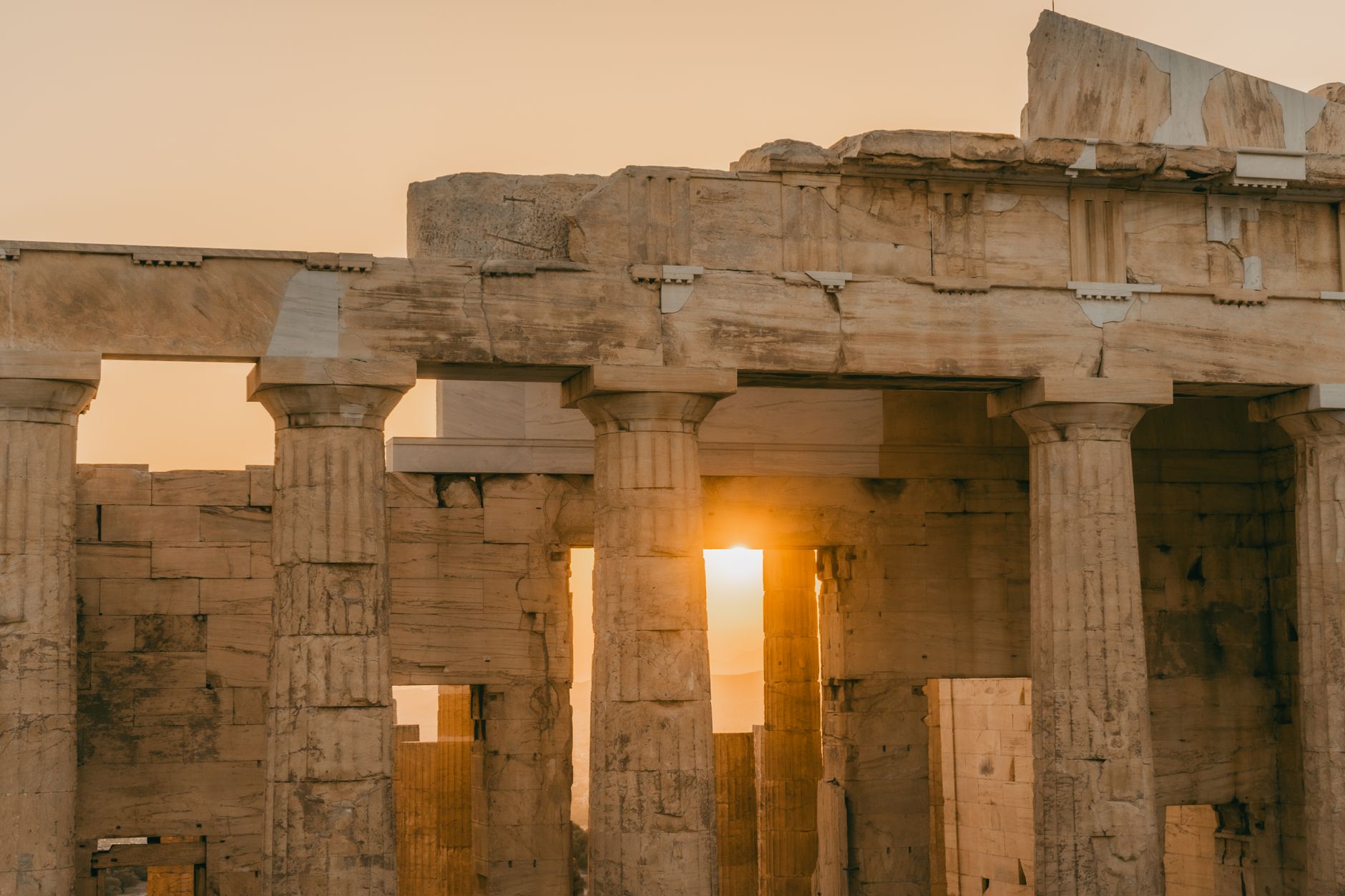
The Acropolis is the reason and it should be visited once, properly. The mistake is visiting it in the afternoon on a summer day: the hill is exposed, the crowds peak between 10 a.m. and 3 p.m., and the heat is punishing. The correct version: arrive at opening, which is 8 a.m. in summer. The first hour on the site is the one the professionals photograph — the light low and warm, the Parthenon gaining colour, the city below beginning to move. By 9:30 a.m. you can be at a café in the Monastiraki flea market with the rest of the morning ahead.
The Acropolis Museum
The museum at the base of the hill is the argument for arriving a day earlier than you planned. It is housed in a building designed to reveal, through a glass floor, the excavation of the ancient neighbourhood directly below. The Parthenon gallery on the top floor holds the surviving frieze and metope sculptures in chronological arrangement, with the replicas of the pieces held in London placed in position with identifying lighting — a tacit political argument about repatriation, stated entirely through curatorial decision.
“The first hour on the Acropolis is the one the professionals photograph.”
The neighbourhoods
Plaka for the obvious reasons — the preserved neoclassical streets, the tavernas on the hillside, the view back up at the Parthenon. Monastiraki for the flea market and the breakfast cafés. Psirri, adjacent, for the genuinely good restaurants where the chefs have returned from abroad with techniques. Koukaki, on the southern slope of the Acropolis hill, for the neighbourhood coffee shops and the very good restaurants that the hotel guides haven’t fully catalogued yet. Exarchia, further north, for the bookshops and the sense of the city as a living intellectual culture rather than a tourism product.
The food
Greek food has been quietly transforming for fifteen years, and Athens is where the transformation is visible. The restaurants worth the reservation are not the ones with the Parthenon view — those are almost always trading on the view. They are in the side streets of Psirri, in the ground floor of a repurposed house in Koukaki, or at a counter somewhere in the Central Market. Ask the hotel; the concierge at The Dolli, specifically, has the list updated and is reliable.
Give Athens three nights. It is not the city you pass through on the way to the islands; it is the reason the islands have a civilisation to be islands of. Two nights is the regret. Three is the trip.