

Journal · Destinations
India, for Indians
There is a reliable phenomenon in Indian travel planning: the country that produces some of the world’s most extraordinary natural and historical landscapes is routinely overlooked by the people who live in it. Indian travellers come to us for Maldives, Europe and Japan. We regularly find ourselves making the argument for India itself, and the argument is an easy one to make.
The Rajasthan that isn’t on the tour
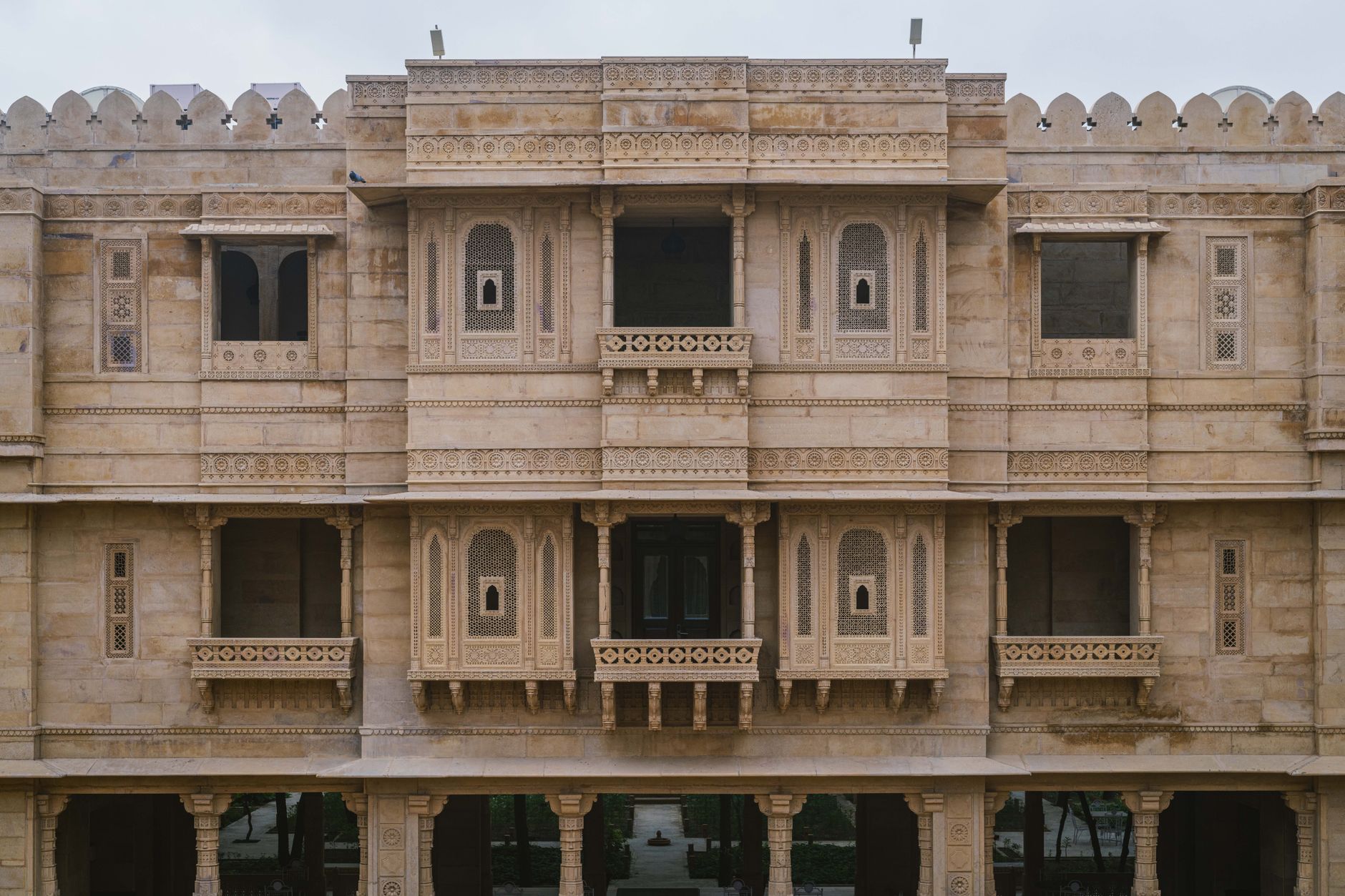
Rajasthan is the obvious entry: the forts, the palaces, the desert. The problem is that the tour-group version of Rajasthan — Jaipur, Jodhpur, Udaipur, Jaisalmer, in four days — is the one that most Indian travellers have already experienced, or feel they’ve experienced through enough accounts of it. The alternative is specific: Chhattrasagar and the tent camp on the private hunting ground; the Ahwa estate in the Aravalli hills; the small princely-family hotels in Dundlod and Mandawa where the owners still live in the part of the house that faces the courtyard and want, genuinely, to talk to you about the paintings.
Ladakh, before August
Ladakh in August is a version of Ladakh with the road infrastructure maximally tested and the monasteries at peak visitor count. Ladakh in June and July, before the school holiday crowd arrives, is a different experience: the Nubra Valley road is open, the high passes haven’t yet accumulated the convoy traffic, and the landscape is doing the thing that Ladakh does, which is to make everything you thought you knew about the scale of the natural world feel provisional.
“India produces some of the world’s most extraordinary landscapes and is routinely overlooked by the people who live here.”
The Andamans
The Andaman and Nicobar Islands sit closer to Myanmar than to mainland India, in the Bay of Bengal, and the sea around the uninhabited islands is among the best coral diving in Asia. The logistics are slightly involved — a flight to Port Blair, then a boat to Havelock or Neil Island — but the reward is a coastline that looks like the Maldives at a fraction of the price, with the added texture of having a history (the cellular jail, the mangrove interior, the forest cover) that the Maldivian atolls don’t offer. The window is November to April; the monsoon closes the sea crossings from May to September.
Coorg and the Western Ghats
Coorg, in the coffee hills of Karnataka, offers the version of hill-station travel that the more famous options — Ooty, Kodaikanal — can no longer deliver because they’ve been discovered in the wrong way. The estate homestays in the coffee and cardamom plantations are genuinely good; a few are excellent. The walking is through working agricultural land rather than a recreational park. The food, at a property that grows its own ingredients, is the argument the district needs.
The most overlooked destination on most Indian travellers’ lists is the one they’re standing in. A single day’s travel inside the country opens a tier of experience a long-haul flight can’t buy. Ask us — we’ll make the case.