

Journal · Destinations
Japan in seven decisions
Japan is the easiest country in Asia to travel badly. Everything works, everyone is kind, the trains arrive to the second — and you can move through all of it for a fortnight and come home having seen the museum version. The extraordinary Japan and the merely-very-good one are separated by a handful of specific decisions, made early. Here are the seven that matter.
1. Which season
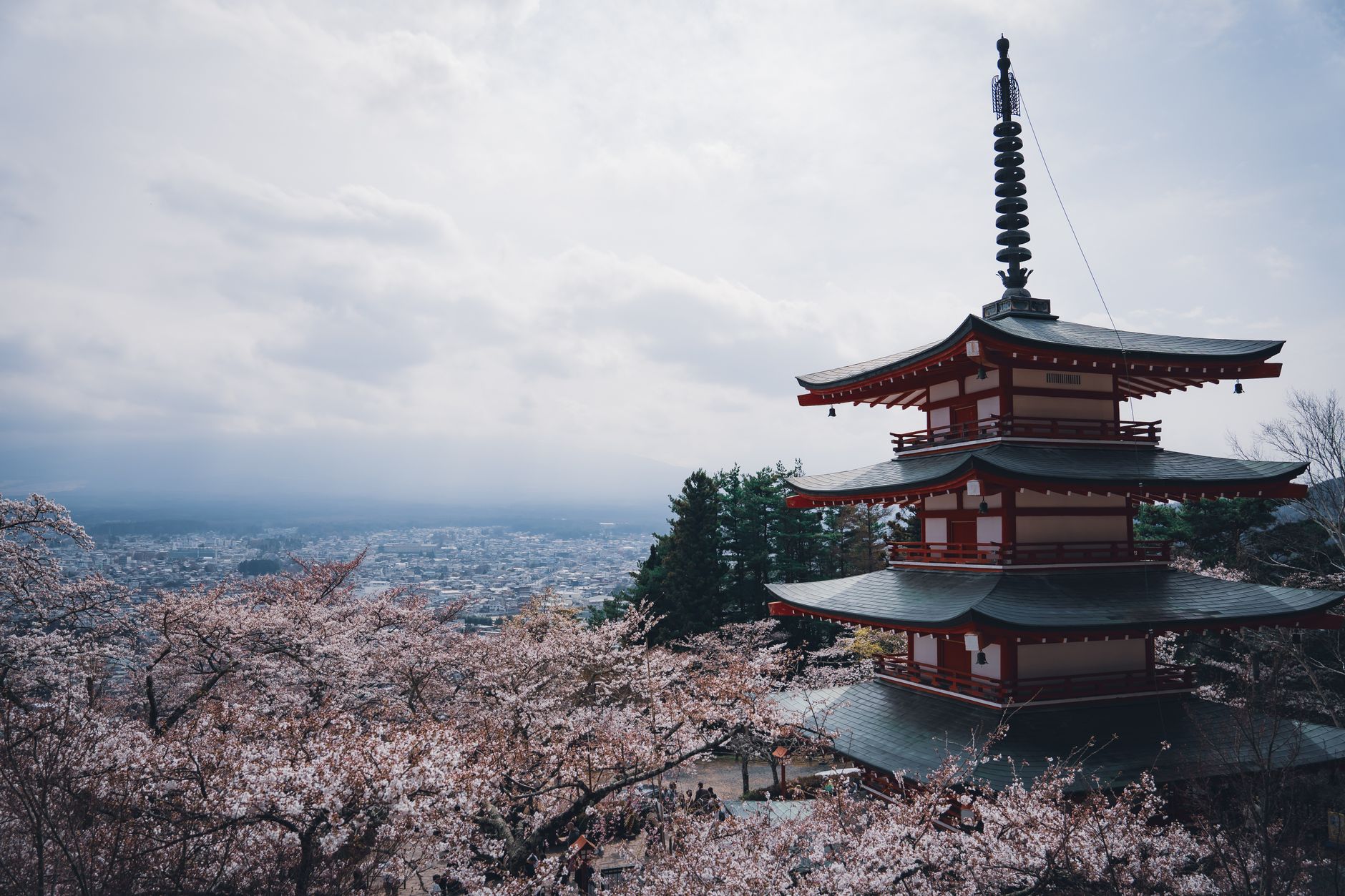
Sakura or momiji. Everything else is a compromise. Cherry blossom runs late March to mid-April, starting in Kyushu and moving north; autumn leaves peak in October and November, starting in Hokkaido and moving south. The third window, winter in the Japan Alps or Hokkaido for snow activities, is increasingly excellent and notably uncrowded by Japanese standards. June through August is humid and busy; avoid unless you have specific reasons.
2. Tokyo first or last
Last. Tokyo is a world city and it will be fine whenever you arrive, but landing in Tokyo and then going to Kyoto reverses the logic of the trip. Kyoto requires adjustment — slower pace, earlier mornings, the particular quiet of a temple before 7 a.m. — that is harder to find if you’ve spent three days in Shinjuku first. Arrive in Osaka or Kyoto, move through the slower Japan, arrive in Tokyo as the finale.
3. The ryokan night
Mandatory. Non-negotiable. The ryokan night — the tatami room, the yukata, the multi-course kaiseki dinner brought to the room, the communal onsen at dusk — is the trip’s soul. One night is the minimum; two is better. Skip it and you’ve been to Japan’s museums. Don’t skip it.
“Skip the ryokan and you’ve been to Japan’s museums.”
4. Nara or Nikko
Day trips from the main cities. Nara for the deer and the Daibutsu — essential for families, compelling for everyone. Nikko for the elaborate Toshogu shrine complex, if the aesthetics of layered decoration appeal to you. Both are 45 minutes to 90 minutes by limited express. Pick one; trying to do both in the same trip is the greed that flattens a Japan itinerary.
5. Which Kyoto neighbourhood
Higashiyama for temple density and the preserved machiya streetscapes. Gion for the idea of Gion — the lanterns, the possibility of a maiko glimpsed at dusk. Neither is wrong; they are different evenings. The capsule version: breakfast near the Fushimi Inari trailhead before the crowds arrive, morning in Arashiyama when the bamboo grove is quiet, afternoon in Higashiyama, evening in Gion.
6. The food rule
Go to the counter. Sushi, ramen, tempura, tonkatsu — every form is better at a counter, smaller, with an owner, than at a restaurant optimised for foreign visitors. The hotel concierge chain is the unlock: a luxury hotel in Tokyo or Kyoto has relationships with counters that don’t take direct reservations. We activate that chain on every Japan itinerary, and it determines the quality of the food story more than any restaurant list.
7. How many nights
Ten nights minimum. Twelve is comfortable. The standard allocation: three nights Kyoto/Nara, two nights Osaka, one night ryokan, four nights Tokyo, two transit. Trying to add Hiroshima and Kanazawa and Hakone to this is the most common Japan planning mistake: each is worth going to, none is worth rushing through, and the bullet train time adds up.
Get these seven right and Japan stops being a list of sights and becomes a country you’ve actually been to. Get them wrong and you’ll have seen everything and arrived nowhere. The decisions are small. The difference is the entire trip.