

Journal · Destinations
Milos: worth the extra ferry
Milos is a forty-minute flight or a four-hour ferry from Athens, depending on your tolerance for maritime travel. It is a volcanic island in the western Cyclades with a coastline so varied — white rock cliffs, multi-coloured fishing villages, sea caves accessible only by boat — that it became the home of the world’s most famous ancient sculpture. The Venus de Milo was found in a field here in 1820 and left for Paris almost immediately. The island retained its character.
What it looks like
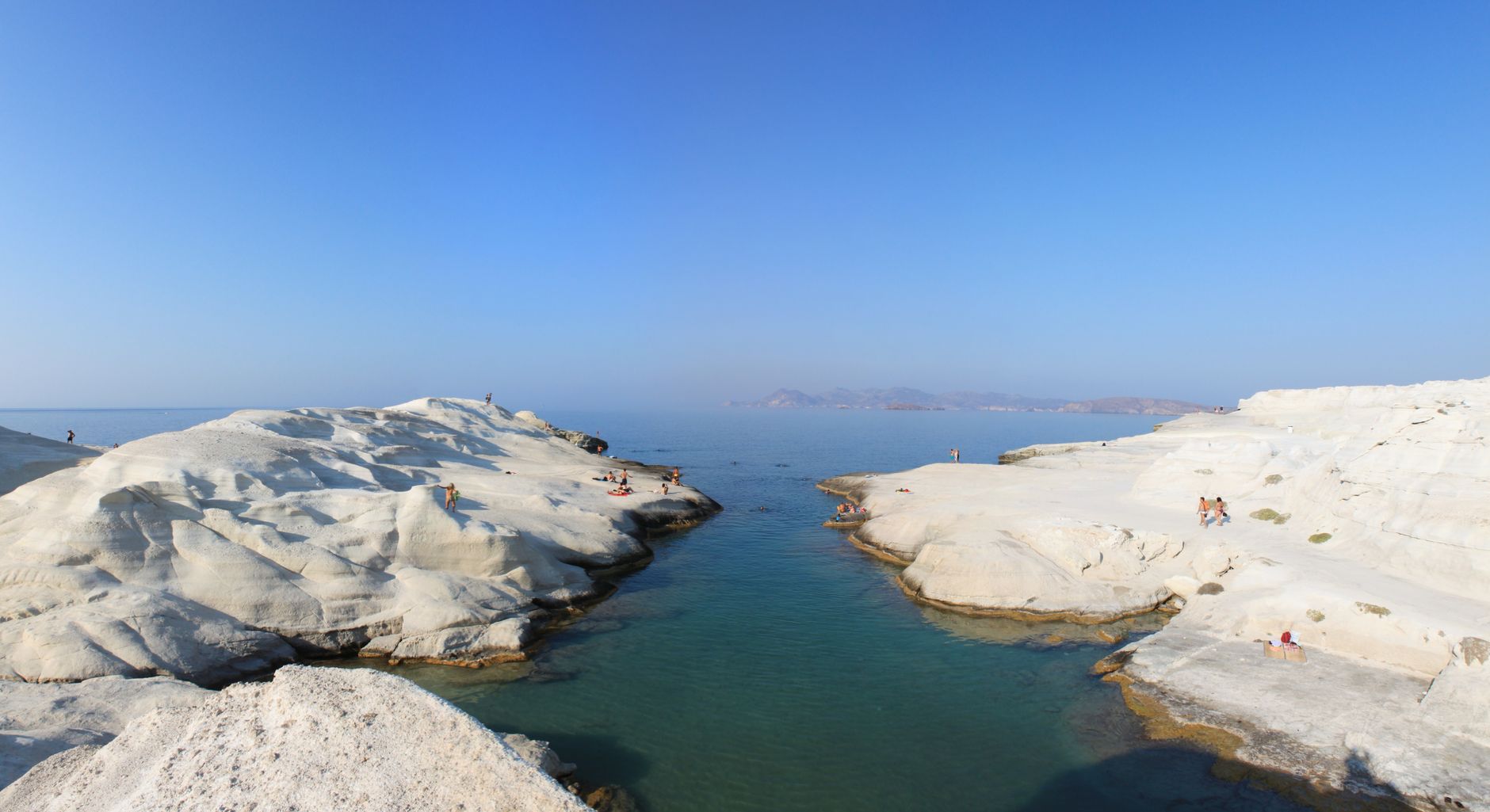
The coastline is the destination. Sarakiniko, the beach in the north — white volcanic rock eroded into smooth curves, turquoise water filling the channels — is the photograph that circulates and is one of the very few Instagram-famous landscapes that exceeds its reputation when you arrive. The photograph is taken from the edge of the rock; the reality includes the 20-minute walk from where the bus drops you, the scramble down the stone, and the water that is cold even in September. All of it is better than the photograph.
Klima, on the south coast, is the fishing village with the coloured boat-garages at the waterline, the combination of primary colours and Aegean blue that has been in every Greek island photography book for forty years without becoming overcrowded because there are eleven restaurants and no hotels and the only reason to be there is the view. Eat lunch. Stay three hours. Leave satisfied.
“The photograph is taken from the edge of the rock. The reality is better than the photograph.”
How to see it
By boat. The island is small enough to circumnavigate in a day by private boat, and the coastline is the specific reason to be there. The sea caves — some requiring low clearance to enter — are inaccessible from land. A full-day boat rental with a captain who knows the island is a hundred euros per person for a group of four or five; it is the best single spend on a Milos itinerary.
Where to stay and eat
The accommodation in Milos skews boutique: small cave-house hotels and converted neoclassical buildings, mostly in the Plaka hilltop town or in the fishing village of Pollonia in the north. The restaurants are similarly independent and similarly good when you find the right ones. The fishing heritage means the seafood is current; the village setting means the atmosphere doesn’t require a set-design budget to achieve.
The sequencing
Milos works best as part of a Cyclades route: Santorini first (the caldera, two nights), Milos second (the volcanic coastline, two nights), Mykonos third (the finale, two nights), and Athens at either end. The ferry connections are not seamless — there’s no direct Santorini-to-Milos service on all days; we route via Piraeus or by flight for some itineraries — but the logistical complication is proportional to the reward.
Milos is the extra ferry that pays for itself. Go before the crowd that found Santorini finds this too — which, at the current rate, gives you a season or two. Don’t waste them.