

Journal · Destinations
Morocco: the order of operations
Everyone who has been to Morocco has an opinion about Marrakech. It ranges from “the most extraordinary place I’ve ever been” to “completely overwhelming and I’d go back.” Both reviews are correct. The variable isn’t the city; it’s what came before it and what came after.
The argument for going last
The conventional itinerary puts Marrakech at the start. You arrive, you’re deposited in the medina, the souks begin immediately, and one of two things happens: you either fall in love with the chaos within 24 hours, or you spend four days trying to and fly home vaguely defeated.
Our preferred order runs the other way. Start at the coast — Essaouira or Agadir — two nights of wind and whitewash and tagines in small restaurants, where the pace is easy and the people who approach you are mostly interested in selling you an artisanal something, not the full medina experience. Then the Atlas: a night in the mountains, either at a kasbah lodge above the valley or, if the itinerary allows it, a night at an Agafay camp with the Koutoubia in the distance and silence in every direction. Then Marrakech, arriving with your feet already on Moroccan time.
“Marrakech arriving third, when you’re already on Moroccan time, is a completely different city.”
Marrakech arriving third, when you’re already on Moroccan time, is a completely different city. The souks are navigable. The chaos has a grammar. The dinner you’ve been promised — a rooftop table above the Jemaa el-Fnaa with the smoke and the storytellers below — delivers exactly what it promises.
The Atlas question
The Agafay desert, thirty minutes from Marrakech, is the answer to most people’s romantic idea of a Moroccan desert camp — closer, less logistically complex than the Sahara, and, if you choose carefully, genuinely atmospheric. The landscape is rocky and lunar and dramatic in a way the photographs don’t quite capture. The camps range from genuinely excellent (tented suites with proper beds, serious kitchens, a fire at dinner) to Instagram-funded disappointments where the “experience” stops at the camel selfie.
We book one camp there by name, for one night. We’ve stayed in it ourselves. The distinction between the good and the mediocre matters more in the Agafay than anywhere else on a Morocco itinerary because a bad night in the desert is a long, cold night in the desert.
Fes: worth the detour
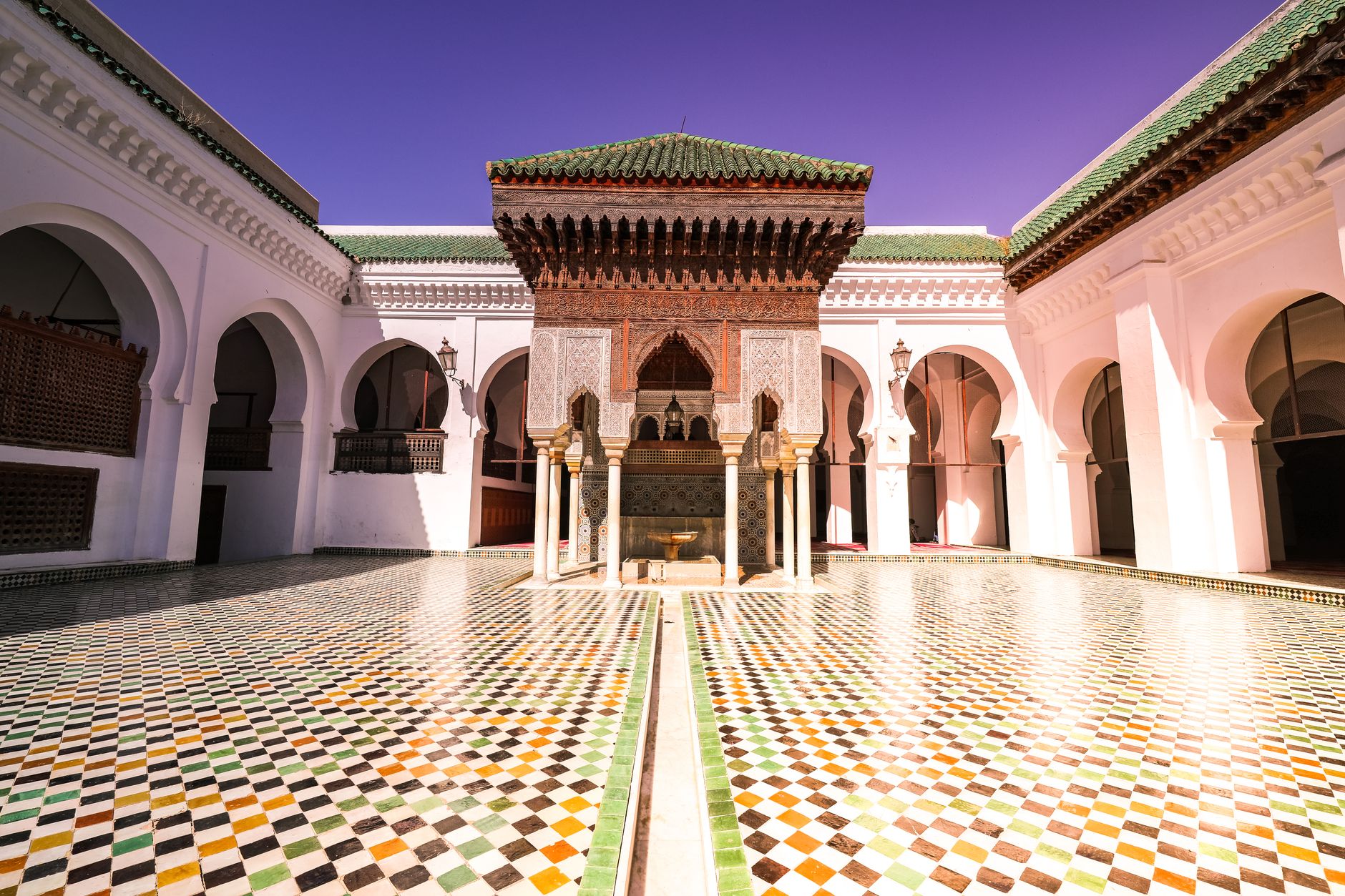
If the itinerary allows ten nights, add Fes. The medina is a UNESCO site and the largest car-free urban area in the world, which sounds like a tourism board claim until you’re inside it — a labyrinth of 9,000 streets that genuinely requires a guide for the first morning, not because you’ll get lost (you will), but because the guide is the context. The tanneries, the Quaraouiyine, the fondouks: they need a narrator. After the morning with a guide, Fes is navigable on your own terms and richer for the knowledge.
Seven to nine nights is the honest duration for Morocco done well. It’s slightly too far and too layered for four nights and slightly too concentrated for two weeks unless you add the south. The standard Alp Morocco is eight nights: two coast, one Atlas, two Marrakech, two Fes, one transit. The variations involve children (drop Fes, add time in the Agafay), honeymooners (Marrakech palace hotel, private riad), and the contrarians who want the full desert south instead. All are possible.
Morocco in the right order — coast, then mountains, then the city you’ve been building toward — is one of the great trips available this close to home. Get the order wrong and Marrakech eats you alive on day one. Get it right and it’s the finale you’ll be talking about for years.