

Journal · Destinations
Uzbekistan, before your feed finds it
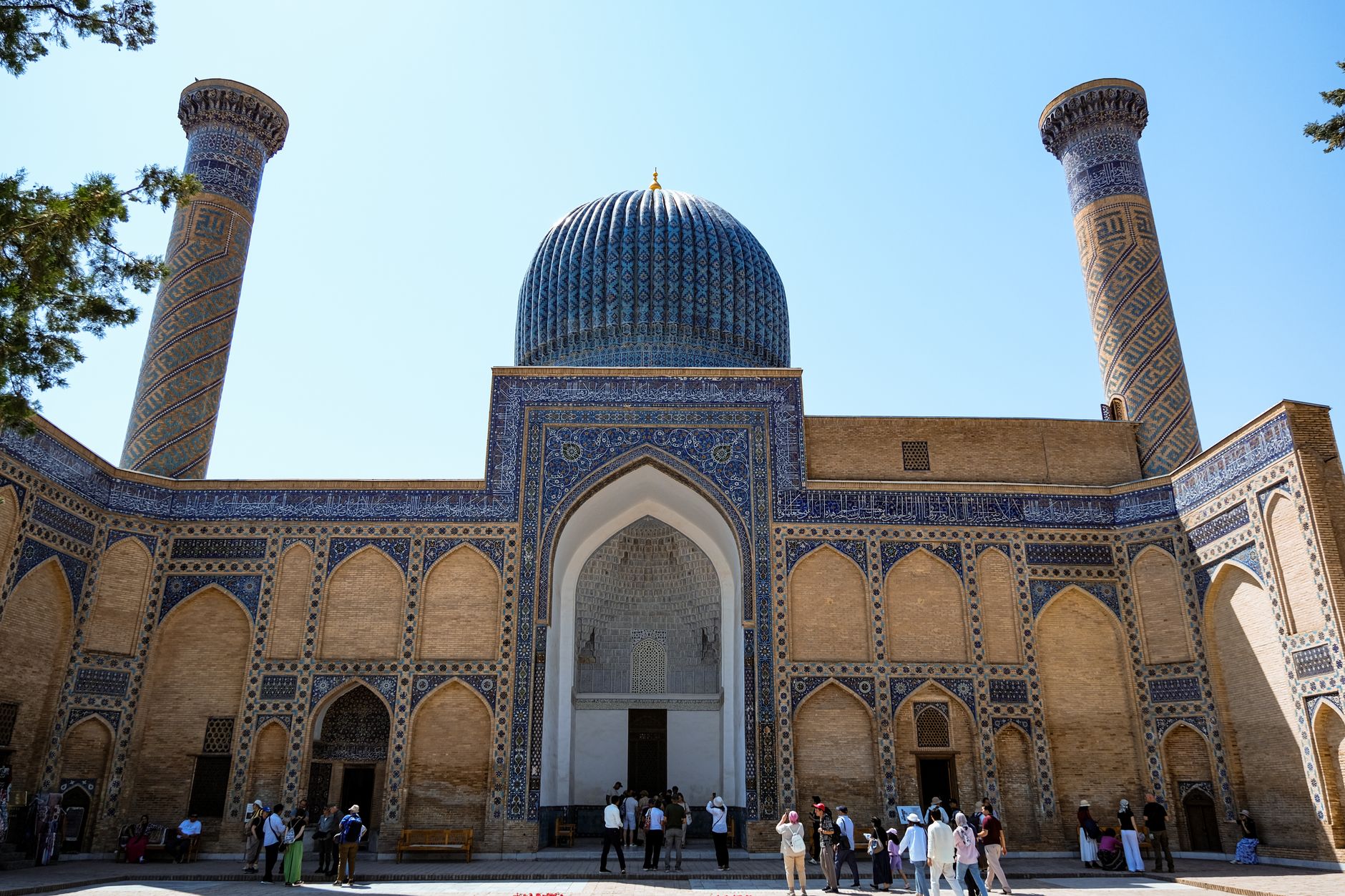
There are very few destinations left that combine genuine historical scale with the relative absence of the travel infrastructure those sites usually attract. Uzbekistan is one of them. The Registan — the great public square of Samarkand, flanked by three madrasahs covered in turquoise tilework — is a UNESCO World Heritage site that, on a weekday morning in October, you can walk across in relative quiet. The photographs look like a set. It isn’t.
What to actually see
Three cities, strung on a line. Samarkand is the centrepiece: the Registan, the Shah-i-Zinda necropolis (a corridor of tiled mausoleums, one of the most beautiful things in Central Asia), the Bibi-Khanym mosque with its enormous open courtyard. Bukhara, four hours west by the Afrosiyob high-speed train, is more intact as a living city — the trading domes still function as bazaars, the Kalon minaret still sounds at dawn, the old city has the texture of actual habitation around the monuments. Khiva, further west and accessed by a short flight from Bukhara or Urgench, is the walled city: the Itchan Kala, a UNESCO inner city of mosques and madrasahs still inside its original fortifications. Stay inside the walls.
The logistics
Visa-free entry for Indian passport holders (verify the current terms at planning — the scheme has been renewed periodically). A direct flight from Delhi to Tashkent on Uzbekistan Airways, approximately three hours. The Afrosiyob high-speed train connects Tashkent, Samarkand and Bukhara in a total journey of about four hours and 40 minutes; the journey itself is the sightseeing.
Currency is cash-friendly: bring US dollars and change at the airport or at official exchange points. The rate is standard and the economy runs on it outside the hotels. Cards are accepted at the major properties; everywhere else, assume cash.
“The Registan, on a weekday morning in October, you can walk across in relative quiet.”
April and October
The window for Uzbekistan is spring and autumn. The summer on the steppe is genuinely punishing — 38 to 40 degrees in Samarkand in July is not the context in which to appreciate tilework requiring close attention. The winter is cold and some sites close or reduce hours. April and May have the blossom and the still-cold mornings. October has the harvest and the autumn light. Both are excellent. October is slightly less crowded.
Where to stay
The accommodation story in Uzbekistan is the best-kept secret of the itinerary. The best properties are boutique hotels in restored caravanserais and merchant houses — courtyard architecture, wooden ceilings, silk textiles, rooftop breakfasts. They are not five-star by international convention and they are not trying to be. They are interesting, thoughtful and well-located in ways that a conference hotel adjacent to the old city cannot approach. We have specific recommendations for each city.
Uzbekistan is the rare destination that still feels like discovery — the great turquoise square, half-empty, on an ordinary Tuesday. Go while that sentence is still true. Once the feeds find the Registan, the Tuesday goes with it.