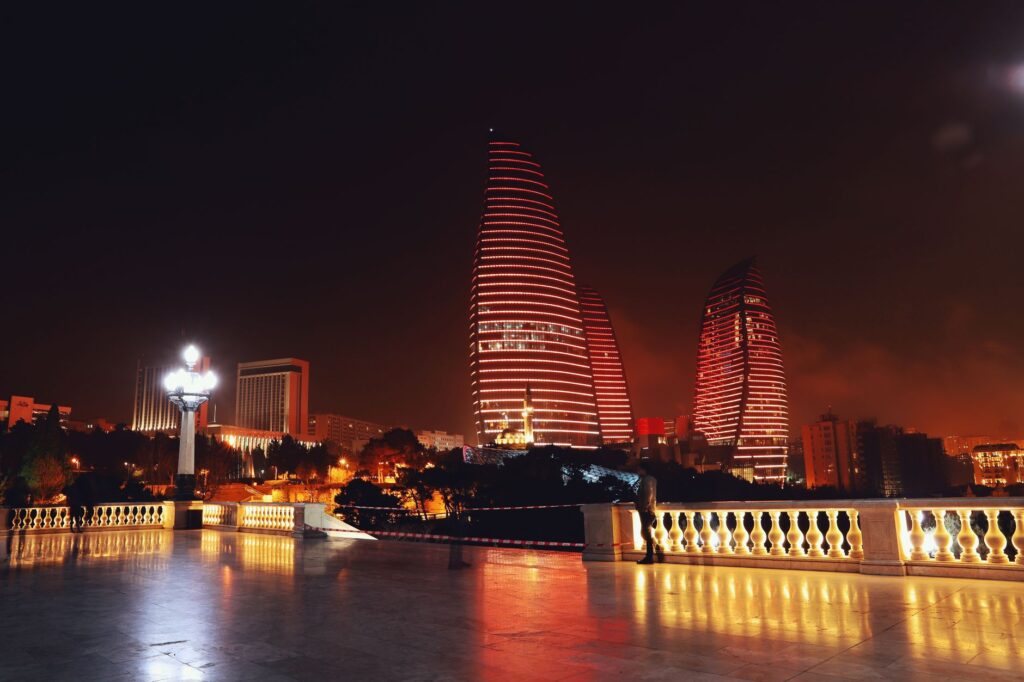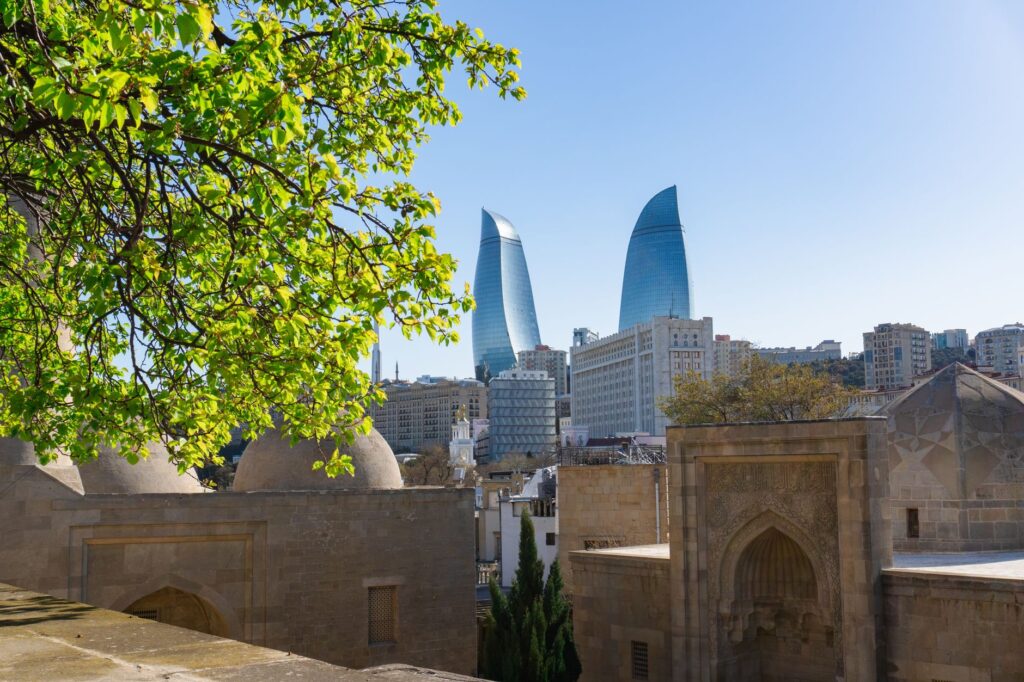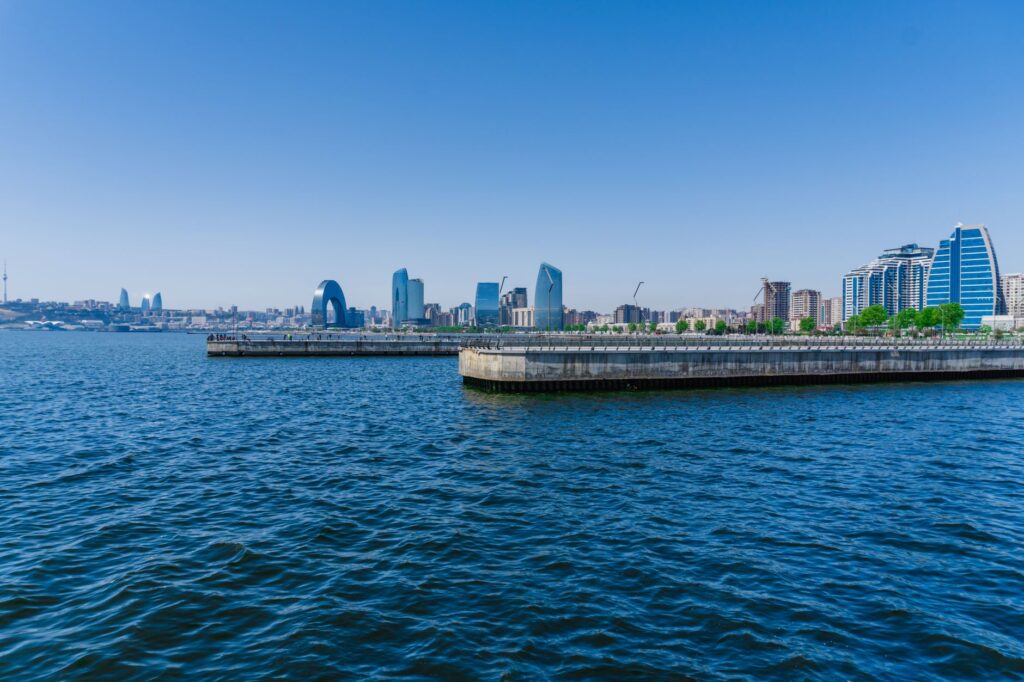

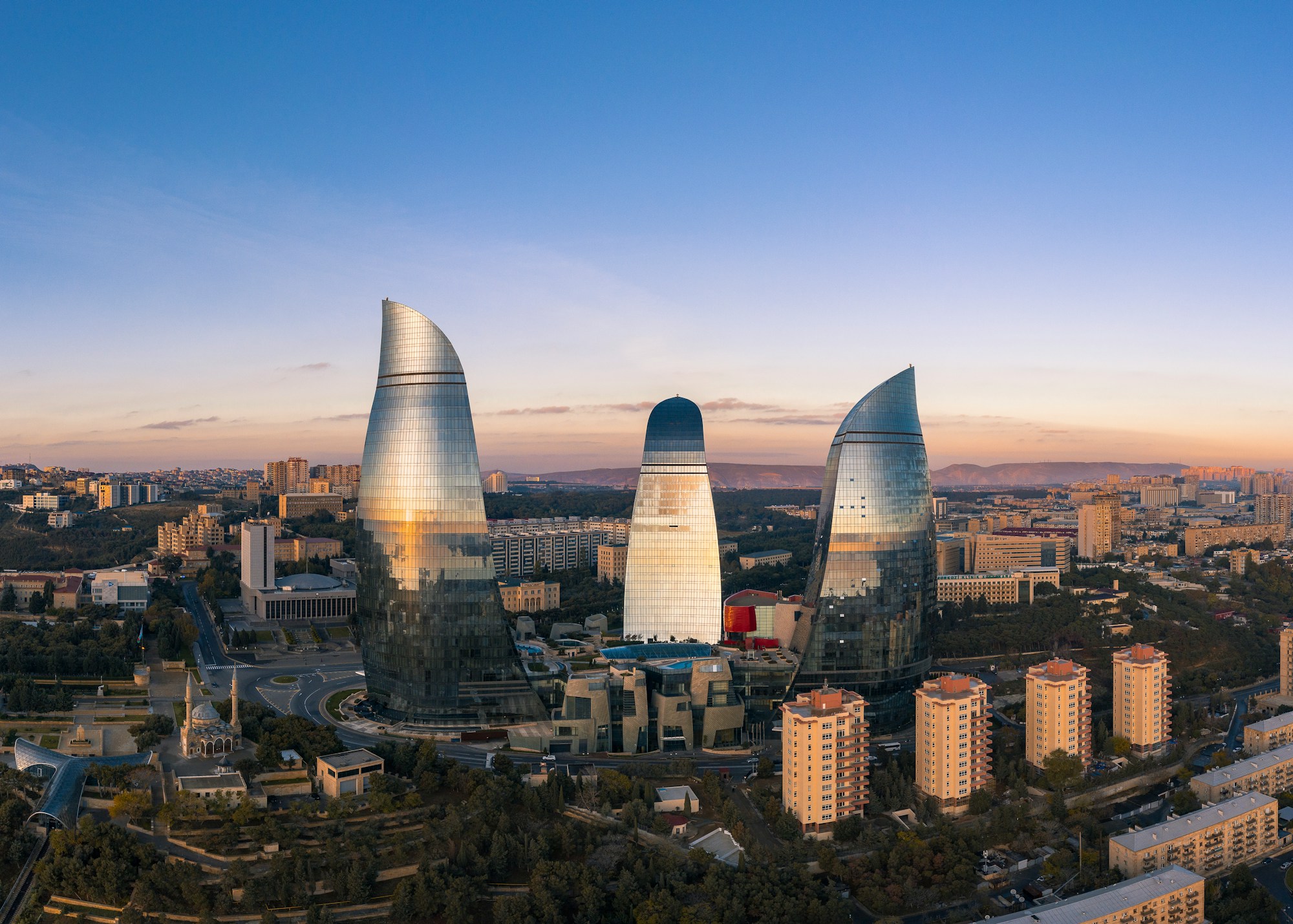
Baku makes a serious architectural argument across two different centuries. The Icheri Sheher — the old city — is a UNESCO-listed twelfth-century walled quarter with a Maiden Tower and a Palace of the Shirvanshahs that predate most of Europe’s medieval architecture; walk its alleys for long enough and you arrive at the point where the walls end and the modern Boulevard begins, and from there you can see the Flame Towers rising above the bay — three glass skyscrapers built in the 2000s and clad in LED panels that run fire animations after dark. Zaha Hadid’s Heydar Aliyev Cultural Centre, a flowing white building that looks like it arrived from a different conversation about what buildings can be, is fifteen minutes away. The city contains all of this without apparent irony, and the effect, particularly when the Caspian turns amber at dusk, is specific to itself.
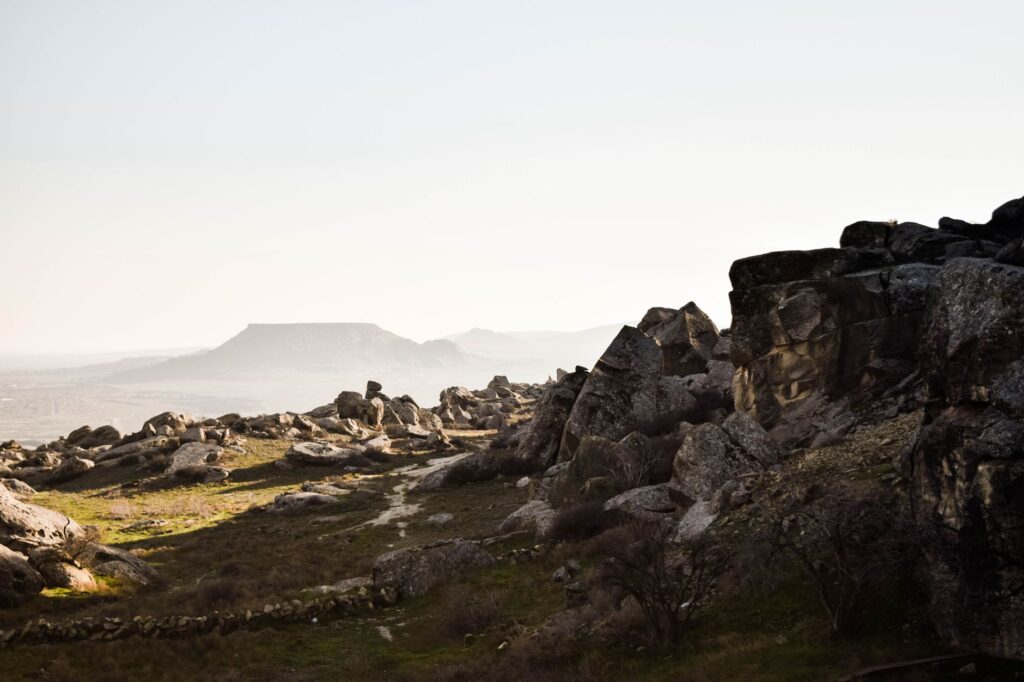
The planning reality of Azerbaijan for Indian clients is that it is easier than it should be given how interesting it is. E-visa in three days, direct flight from Delhi in four and a half hours, no currency drama, hotel quality at the Four Seasons and Fairmont level, and a destination that most of the clients’ friends have not yet done. The trip itself is four to six nights in Baku, with one day trip to the Ateshgah fire temple and the Yanar Dag burning mountain (a natural gas seepage that has been on fire for decades, and which is exactly as strange as it sounds). The Gobustan rock art reserve is an hour south and earns a half day; the mud volcanoes are on the same circuit.
The combination that works best is Baku as the first stop in a Caucasus circuit: Baku to Tbilisi (direct flight, 1h 30m, or overland if time allows), Tbilisi to Yerevan (similar). All three capitals are Schengen-free for Indian passport holders, all three have direct or near-direct connections from India, and the three-destination circuit covers enough geographic and cultural range to feel like a real journey rather than a city break repeated. We route most clients Baku–Tbilisi–Yerevan because the natural landscape improves as you move west and the ending at Yerevan with Ararat on the horizon is the right note to finish on.