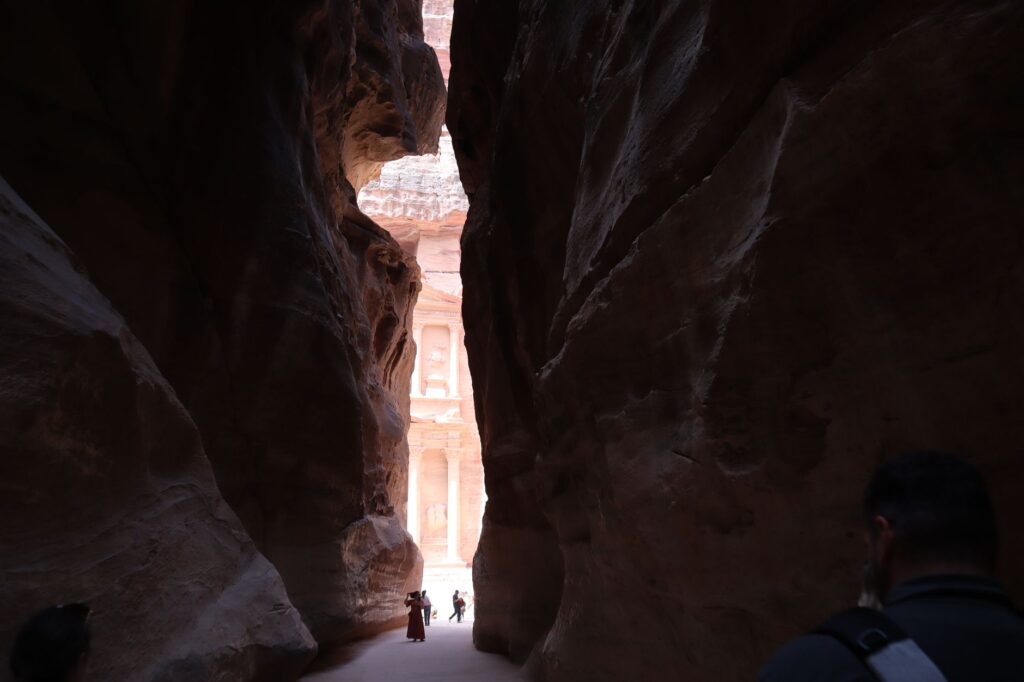

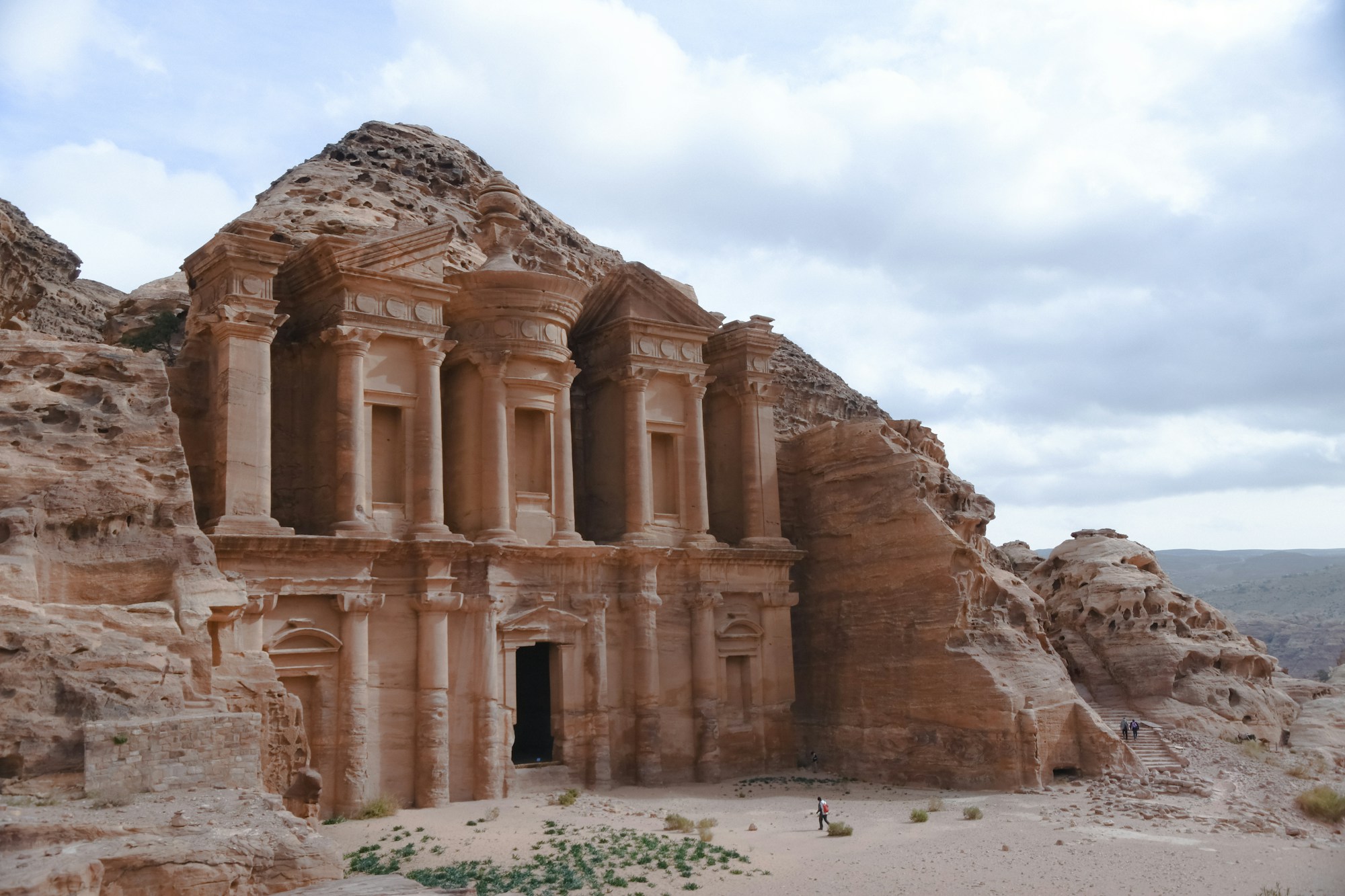
Petra is one of the ten or fifteen things on earth that exceeds its own reputation. The photographs, which you’ve seen since childhood, are of the Treasury — a Nabataean tomb facade carved into rose-red sandstone, framed at the end of the Siq gorge. The photographs are accurate. The experience is arriving through the Siq yourself, the slot canyon narrowing overhead, the light changing as you go deeper, and then the Treasury opening before you at a scale the photographs cannot convey. That is an experience that belongs to being there, not to knowing about it, and it is the reason Jordan earns the flight from India.
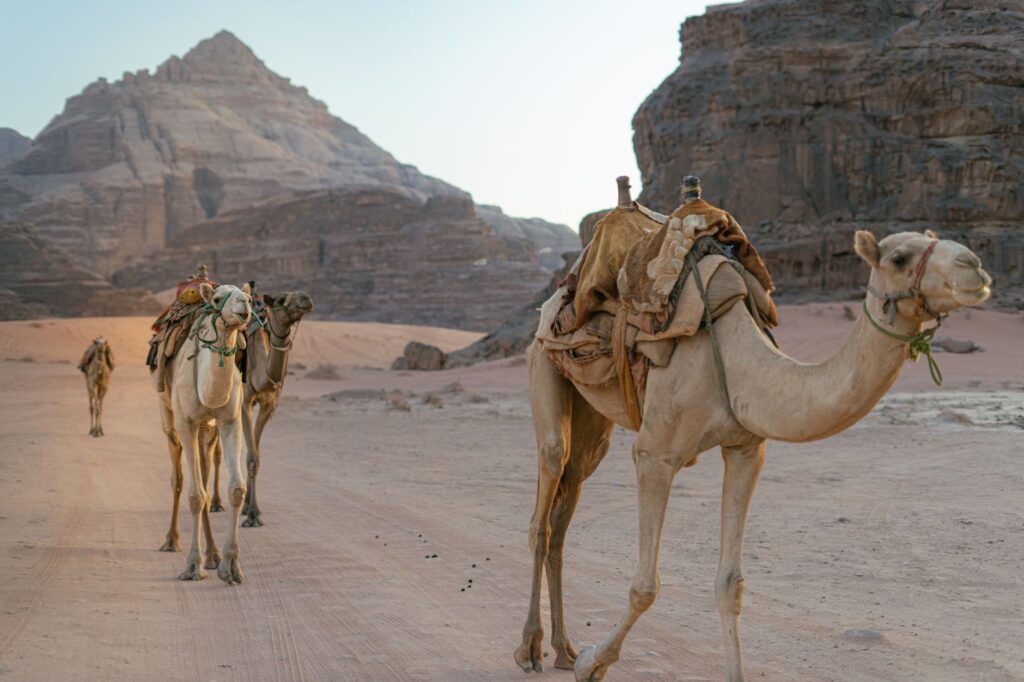
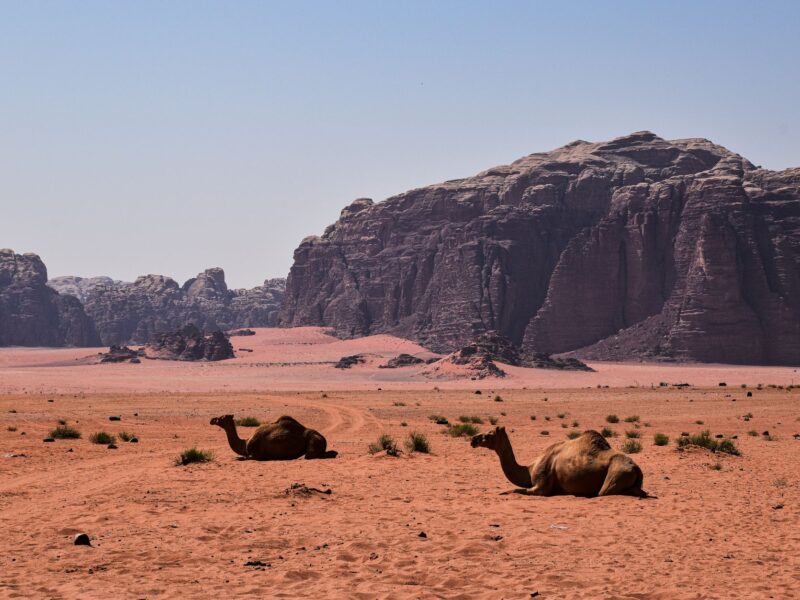
Wadi Rum earns the extra two nights. The desert at the Jordanian-Saudi border is a landscape of sandstone cliffs and silence that Lawrence of Arabia called “vast, echoing and godlike,” and the description has not been bettered. The luxury Bedouin camps here — some with bubble tents so you sleep under the Milky Way — are the right accommodation, full board and desert excursions included. Two nights in Wadi Rum is enough; one is not.
The Jordan Pass is worth purchasing before travel — it combines the visa and the Petra entry fee (JOD 50 for one day alone) with forty-plus other sites, and it pays for itself before you’ve walked through the Siq. A guide for the first Petra morning is not optional and not expensive; without one, 800 monuments are beautiful and contextless. With one, the Nabataean water-management system, the ceremonial processional routes and the story of a civilisation that disappeared into Roman assimilation are the framework that makes the beauty legible.