

Journal · How it works
The neighbourhood question
In a city, where you sleep decides the trip more than the hotel does. A working guide to choosing the right district — with the real trade-offs in Tokyo, Kyoto, Bangkok, Paris and Marrakech.
Two travellers stay at hotels of identical quality in the same city, in the same week, and come home having had completely different trips. One walked everywhere, ate somewhere wonderful every night without trying, and never thought about how to get anywhere. The other spent forty minutes in traffic before every dinner, kept ending up back at the hotel because going out was a project, and remembers the city mostly through a car window. Same star rating. Same budget. The variable was the neighbourhood, and the neighbourhood is the decision most people skip.
When clients ask us which hotel in a city, the honest first answer is usually a question back: which part of the city. Because in an urban trip, where you sleep shapes the days more than the hotel does. The hotel is where you are for eight hours, most of them unconscious. The neighbourhood is where you are for the other sixteen.
What you’re actually choosing between
Five things move when you move neighbourhoods, and a good choice trades them deliberately rather than by accident.
Proximity to the thing you came for. Not the city’s centre in the abstract — your centre, the reason you’re here. A first-timer who wants the famous sights has a different ideal address from a returning traveller who wants a quiet quarter and good dinners.
Atmosphere, and when it happens. Districts have a time of day. A business quarter is immaculate at 9 a.m. and dead at 9 p.m.; a nightlife quarter is the reverse. The question is whether the neighbourhood is alive at the hours you’ll actually be in it.
Noise. The same animation that makes a district fun to walk through at eight makes it hard to sleep in at one. The trade is real and it is personal — some travellers want to step out into the energy, others want to retreat from it.
Transit. In most great cities the single most useful fact about a hotel is how far it is from a station, because that distance silently determines how spontaneous your days can be. A hotel two minutes from a metro line invites you to go everywhere. A hotel twenty minutes from one in traffic quietly persuades you to stay in.
Dining on the doorstep. Whether dinner is a decision or a project. In the right neighbourhood you walk out and choose; in the wrong one, every meal begins with a car.
The hotel is where you are for eight hours, most of them unconscious. The neighbourhood is where you are for the other sixteen.
Here is how those trade-offs land in five cities we book often.
Tokyo and Kyoto: the loop is the secret
Tokyo’s hidden organising fact is the Yamanote line, the loop that strings together most of the districts a visitor wants. Stay on or just inside it and the city opens up; stray outside it and you add a connection to every journey.
Marunouchi, around Tokyo Station, is the first-timer’s answer: broad, calm streets, the Imperial Palace gardens, and the terminus of the bullet trains, which matters enormously if Tokyo is one stop on a wider Japan trip. Ginza is elegant and grown-up — the best shopping, serious restaurants, mature and safe at night. Shinjuku is energy and neon and one of the world’s great transit hubs, for travellers who want the city loud and close. Shibuya is younger, faster, fashion and crowds.
Roppongi is the instructive case. It is cosmopolitan, art-rich — two major museums — and strong on dining and nightlife, and it carries some of the city’s most coveted new hotels. It is also not on the Yamanote loop, which means a connection on most journeys across town. For the right traveller, the art and the hotels are worth it. For a first-timer trying to see the famous city efficiently, the off-loop location is a quiet tax on every day. That is exactly the kind of trade-off that doesn’t show up in a hotel’s photographs and decides the texture of a trip.
For Kyoto the question narrows beautifully. Higashiyama, the old eastern quarter that folds into Gion, is the answer for most: preserved lanes, temple density, the geisha district, the deepest atmosphere in the city. You pay for it in price and in crowds at midday, but you wake up inside the Kyoto people cross the world for, and the early mornings — before the day-trippers arrive — are the reason to be there.
Bangkok: one rule above all others
Bangkok has a single governing fact, and once you know it the city becomes legible: traffic. The difference between a wonderful Bangkok and a frustrating one is almost entirely whether your hotel is a short walk from a BTS Skytrain or MRT metro station. Stay near the rail and the city is yours. Stay off it and you will measure your trip in stationary taxis.
The Riverside is the romance — the great hotels along the Chao Phraya, urban-resort calm, river views, and boat shuttles that glide past the road traffic entirely to a pier connected to the Skytrain. It is the most beautiful base and slightly removed from the street life, which is a feature for some and a drawback for others.
Sukhumvit is the modern all-rounder, strung along the Skytrain, endless in its dining and shopping and nightlife — the right first-timer’s base for someone who wants to step out into the city rather than be ferried into it. Silom and Sathorn form the business core: lively after dark, compact, walkable, well served by both rail systems, and often better value. The Old City, Rattanakosin, is where the great temples are — and it is hectic, noisy, short on quality hotels, and crucially not on the rail network. It is a place to spend a morning, not a place to sleep.
Bangkok has one rule above all others: stay within a short walk of a Skytrain or metro station. Everything else is negotiable. That isn’t.
Paris: prestige is not the same as pleasure
Paris is where the prestige address and the pleasant stay most often part company, and an honest advisor will say so.
The 8th holds the legendary palace hotels along Avenue Montaigne and near the Champs-Élysées — the grandest rooms in the city. But the prestige of the postcode does not translate into a better day: the Champs-Élysées itself is a wide, commercial, faintly disappointing boulevard, and the quarter is not where Parisians live their evenings. You stay in the 8th for the hotel, not the neighbourhood.
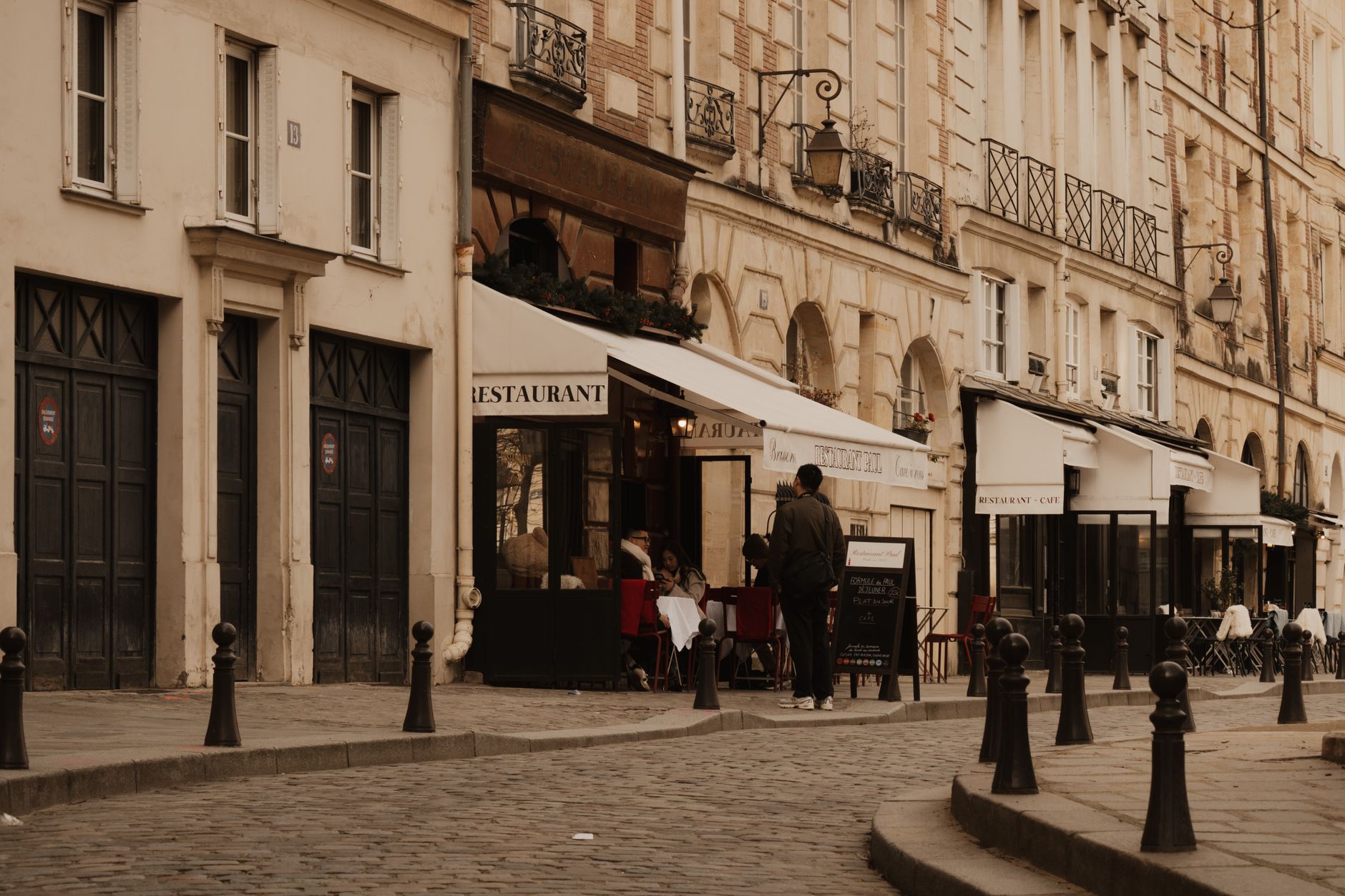
The 7th — Eiffel Tower, Musée d’Orsay — is handsome and residential and genuinely quiet after nine, with fewer metro lines and fewer casual restaurants than you’d expect; rewarding on a longer, slower stay, a touch sleepy on a short one. The 6th, Saint-Germain, is the chic, walkable heart many people picture: the Luxembourg gardens, the cafés, the bookshops — expensive now, a little polished from its bohemian past, but still one of the most pleasant places to simply be in the city. And the 3rd and 4th, the Marais, are a younger kind of luxury: medieval streets, the strongest neighbourhood character in central Paris, independent boutiques and restaurants at every turn, with the quieter 3rd the insider’s half.
The match writes itself once you know the client. The traveller who wants the grand hotel and will spend their days out should take the 8th and not mind the street. The traveller who wants to live in Paris for five days, walk everywhere and fall into dinner without a plan, should be in the 6th or the Marais, almost regardless of which hotel.
Marrakech: four cities pretending to be one
Marrakech makes the neighbourhood question unusually stark, because its districts are almost different cities.
The Medina is the immersion: the walled old town, the riads with their courtyards, walking distance to the Jemaa el-Fnaa, the call to prayer and the labyrinth and the rooftop breakfasts. It is also genuinely hard to navigate, noisy, and constrained on things like alcohol — the full romance and the full friction together. For the traveller who came to be inside Marrakech, there is no substitute. For one who wants ease, it can overwhelm.
Hivernage is the modern, manicured alternative — a concentration of large hotels with pools and spas, a fifteen-minute walk to the old square, a resort calm that some find restful and others find a little placeless. Guéliz, the French-built new town, is Art Deco cafés, galleries, the Majorelle garden and the YSL museum, a European rhythm and better value, ten or fifteen minutes by taxi from the Medina. The Palmeraie, out among the palm groves, is villas and resorts twenty to thirty minutes from town — for a relaxation-led stay where the property, not the city, is the point.
One brief, four genuinely different trips. A honeymooning couple who want courtyards and immersion belong in a Medina riad. A family who want a pool, space and an easy base belong in Hivernage or the Palmeraie. Sending either to the other’s neighbourhood produces a perfectly good hotel and a slightly wrong holiday.
How we actually choose
The method is the same in every city. We start not with the hotel but with the client’s centre of gravity — the reason they’re here and the hours they keep — and then we read the districts against it: proximity to that centre, atmosphere at the right time of day, the noise trade, the distance to transit, and whether dinner is a walk or a drive. Only then do we choose the hotel, from the shortlist the right neighbourhood has already produced.
It is unglamorous, and it is decisive. We have stood on these streets, taken these metro connections at the hours you’ll take them, and watched which neighbourhoods make clients say we walked everywhere and which make them say we spent so long in traffic. The first sentence is the goal. It is almost never about the hotel. It is about the four hundred metres around it.
Choose the neighbourhood first. The right hotel is usually whichever good one is standing in it.
Mentioned in this piece
The order of things
Anatomy of an itinerary