

Journal · Seasonal
Cherry blossom math
Every year, in October and November, our Japan enquiries increase by approximately forty percent. Almost all of them specify March and April. The sakura window is the most sought-after travel season in Japan, possibly in all of Asia, and it is also the most precisely timed, most logistically consequential and most misunderstood seasonal window in our planning calendar.
The bloom is a range, not a date
Cherry blossoms do not bloom on a fixed date. They bloom in response to cumulative warmth after winter — the “sakura-zensen,” or blossom front — which moves from south to north. Kyushu typically peaks in mid-to-late March. Kyoto and Tokyo peak in late March to early April. Tohoku and Hokkaido peak in late April to early May. In a warm year, the front accelerates by a week. In a cold year, it delays by the same. The Japan Meteorological Corporation issues forecasts, which are revised constantly and become meaningfully accurate only about two weeks before the actual bloom.
This creates a fundamental planning problem: you’re booking 6 to 9 months out for a bloom that you won’t be able to predict until two weeks before you arrive. The solution is not to chase the peak, which is a two-to-four-day window of perfection; it’s to target the shoulder of the bloom, which lasts two weeks and offers 80 percent of the experience with 60 percent of the crowd.
“Target the shoulder of the bloom. Two weeks of 80% experience with 60% of the crowd.”
The booking timeline
For sakura season in Kyoto or Tokyo, book hotels in October or November of the preceding year. By December, the key properties — particularly ryokans in Kyoto and the landmark Tokyo hotels near parks — are substantially booked. By January, specific dates around the predicted peak (which, again, isn’t confirmed until February) will be showing limited availability at a significant premium.
The travellers who do best in sakura season are those who plan for late March across the south and accept the variability: if the bloom is early, they hit it; if it’s late, they have the city in early bloom, which is genuinely beautiful and arguably less chaotic. The travellers who do worst are those who book for a single four-day peak window in early April and then discover the bloom peaked in March.
The crowd reality
Maruyama Park in Kyoto during peak bloom on a weekend is one of the most crowded outdoor spaces in Asia. Chidorigafuchi in Tokyo is similar. The photographs that circulate every April — the perfect alley of blossom, the couple in kimonos, the lake reflection — are made at 6 a.m. or later in the week, not at 2 p.m. on a Sunday.
The alternative is the neighbourhood sakura: the smaller shrine, the canal path, the school ground visible from the road. Every Japanese neighbourhood has its sakura trees. The city-scale events are famous for a reason; they are also famous for the scale of the crowd that same reason attracts. Both exist simultaneously.
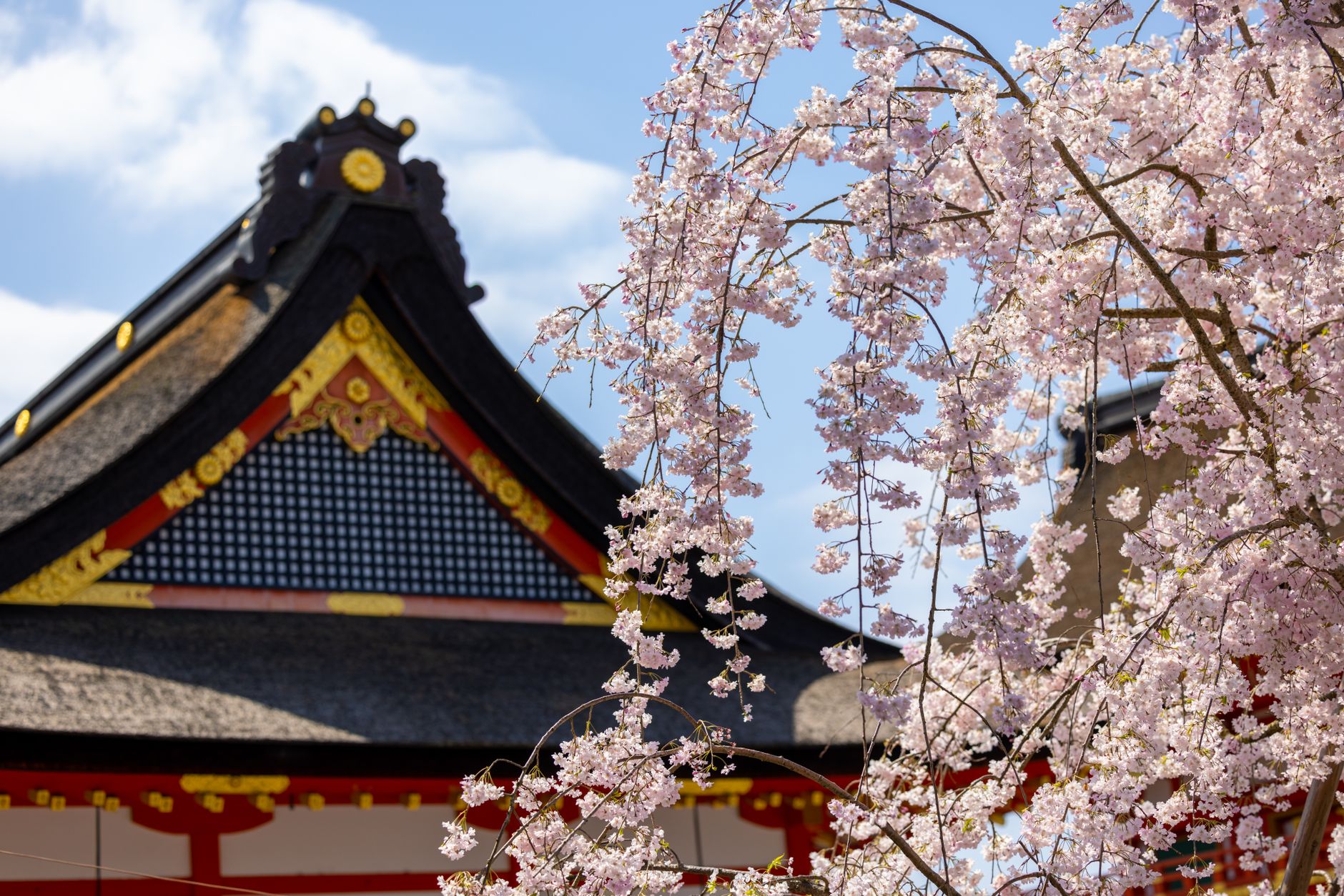
One practical thing: the best sakura experience in Kyoto is often not the famous spots. A rented bicycle, an early start, and a willingness to follow the pink wherever it leads — past the elementary school, through the back streets near Fushimi, along the canal — is consistently the day that people write home about.
Mentioned in this piece
February: the quiet-excellent month
January from India: five windows that work