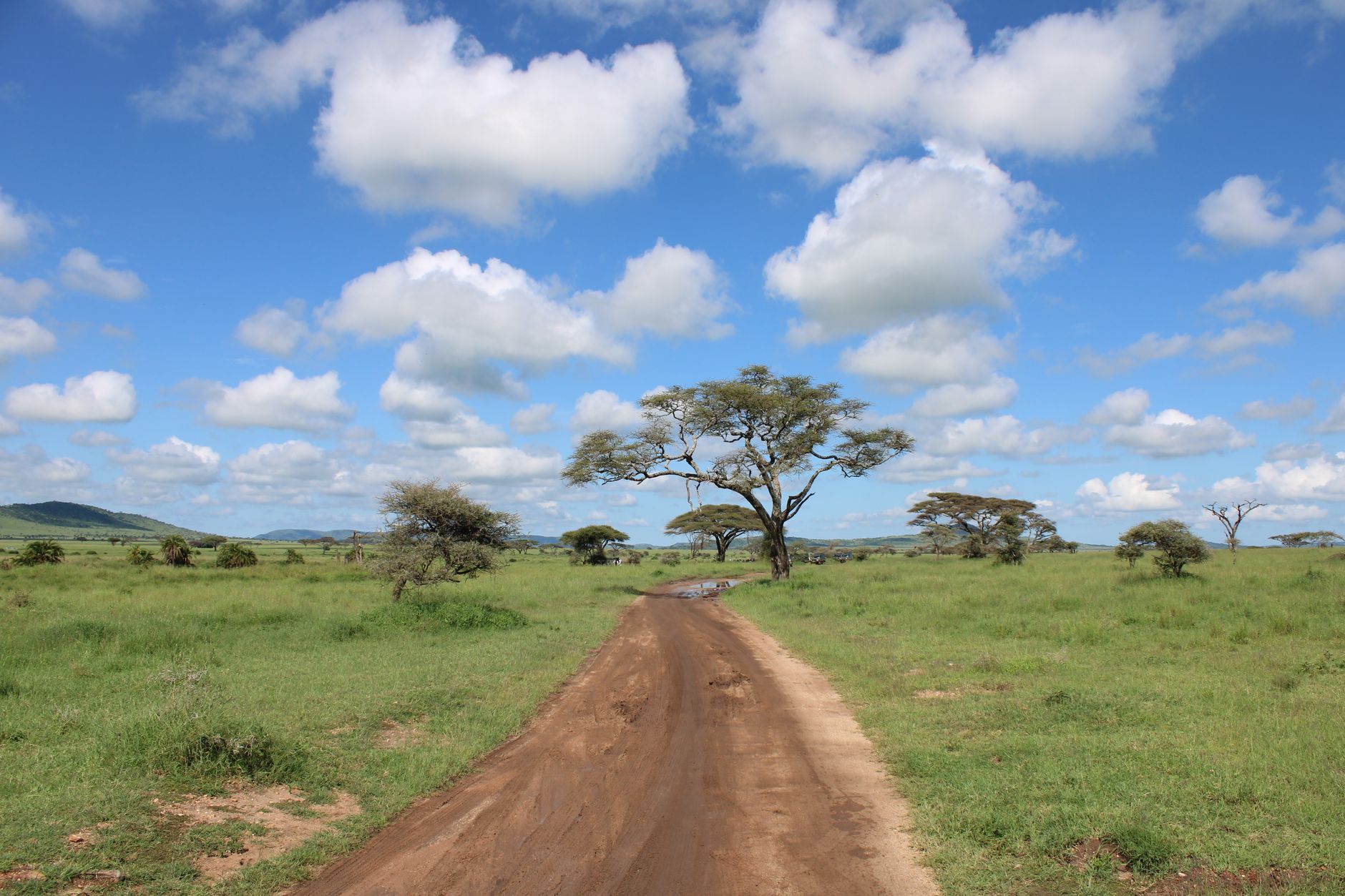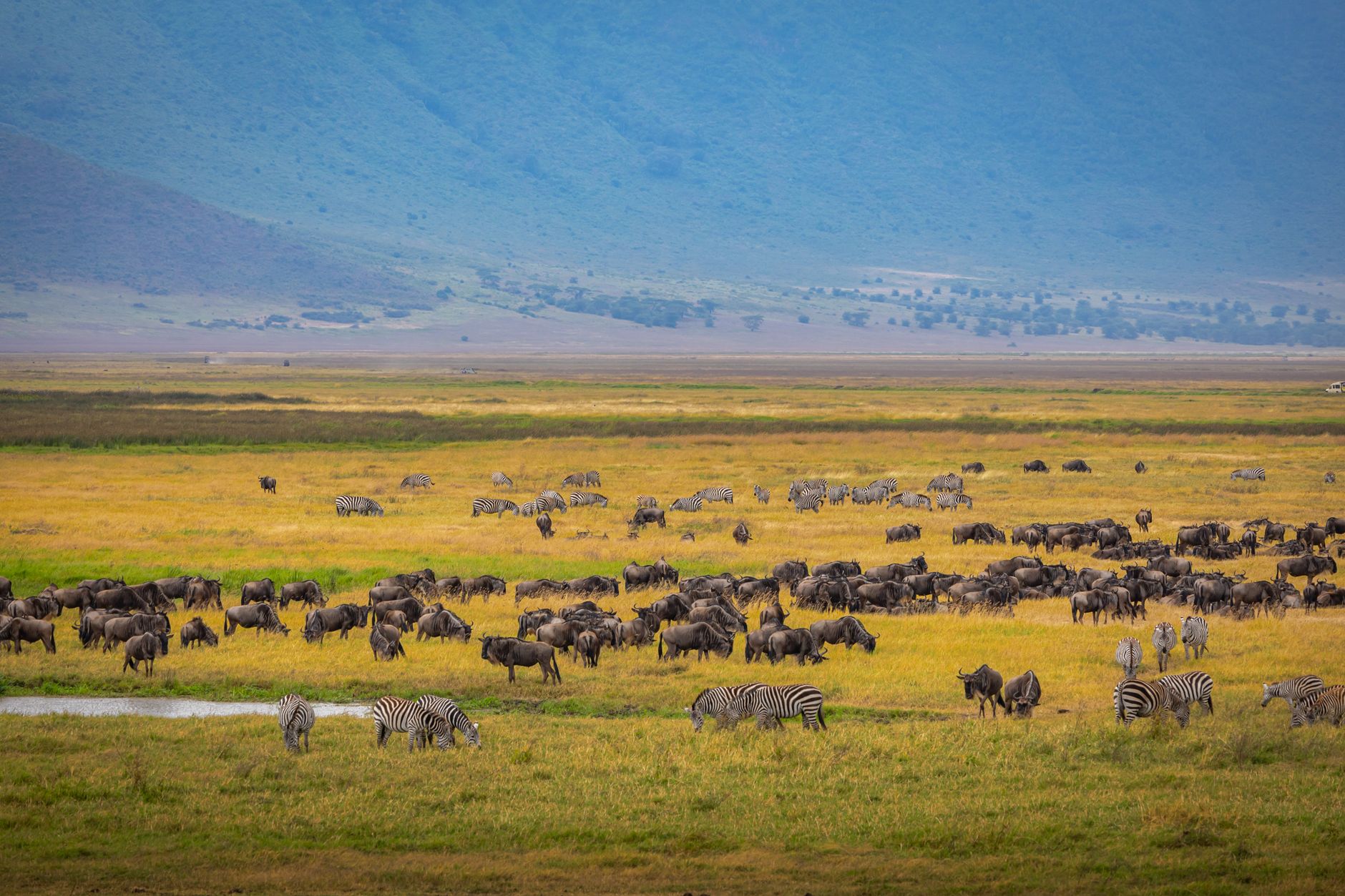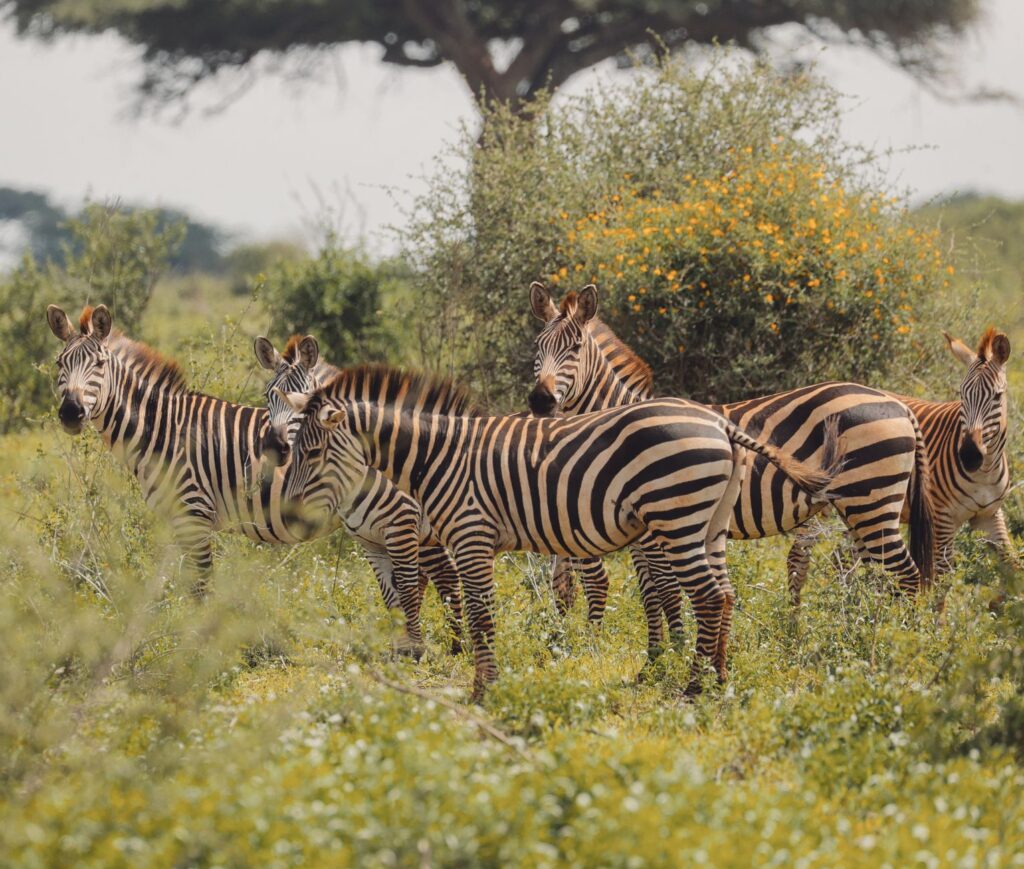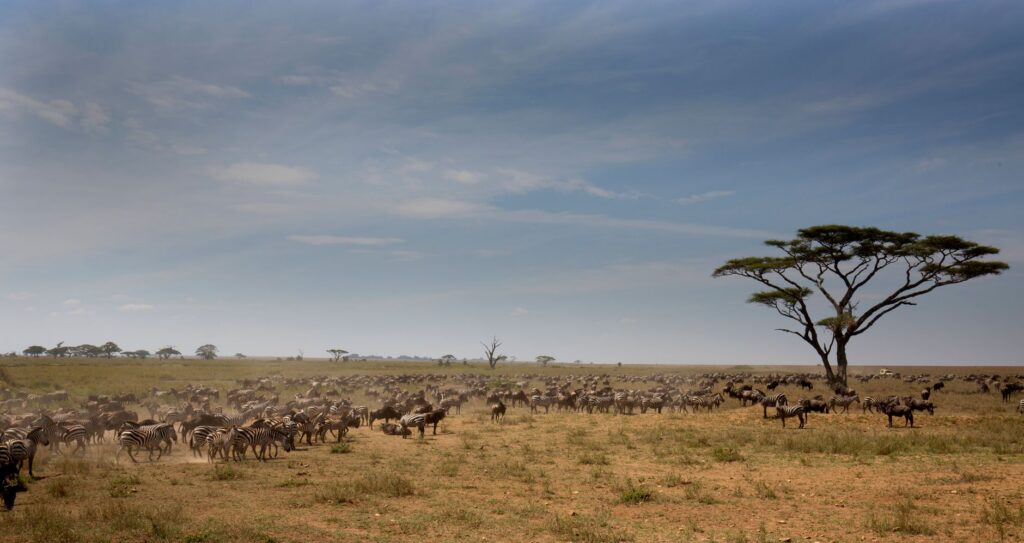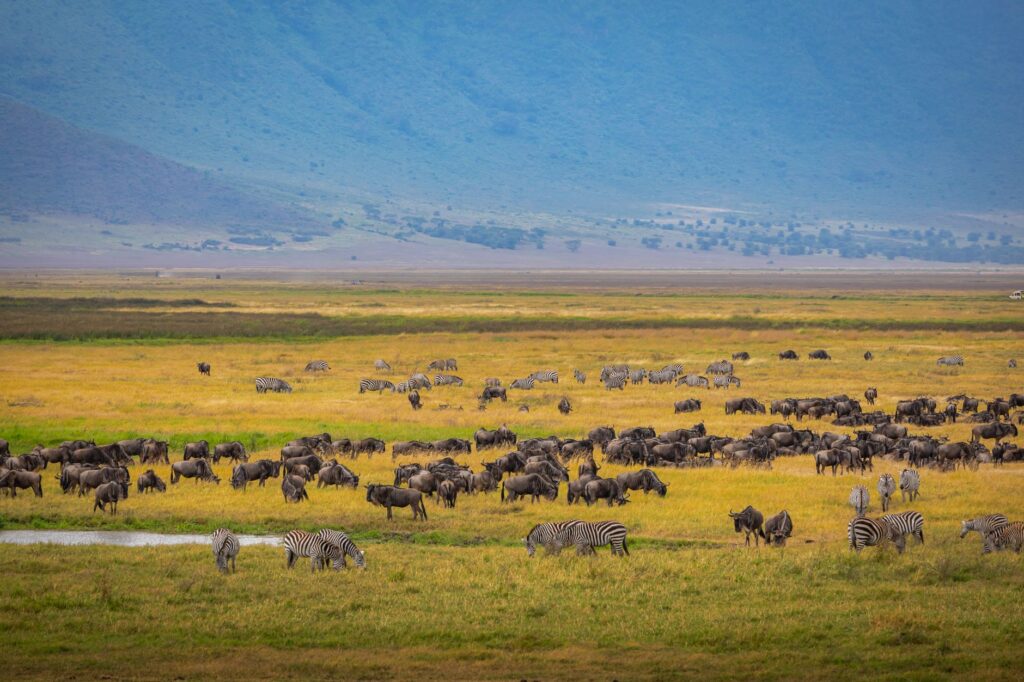

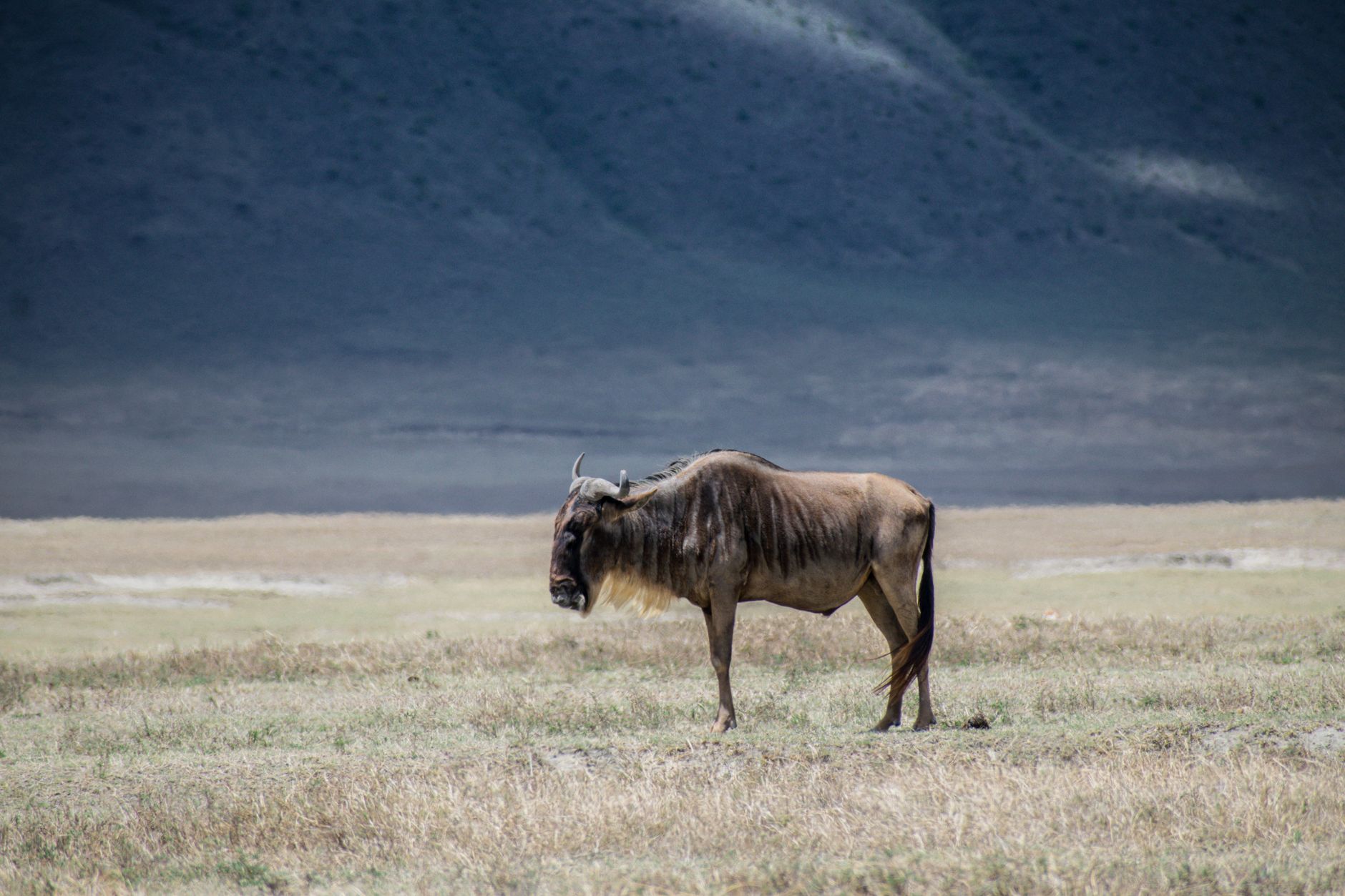
Tanzania is where the scale of Africa becomes visceral. The Serengeti is the largest continuous savannah ecosystem on earth, and the wildebeest migration — 1.5 million animals moving in a circuit between Tanzania and Kenya, driven by the rains, following the grass — is not a spectacle arranged for tourists. It is simply what the Serengeti does, and the camps are positioned within it. The northern circuit, the one most itineraries are built around, runs between the southern Serengeti near Ndutu (where the calving happens in January and February), through the central Serengeti to the northern Mara River crossings (where the drama peaks in August and September), and then the short flight south to the Ngorongoro Crater.
The crater is the other anchor, and it is different in kind from the Serengeti. A 260km² caldera — a self-contained world enclosed by walls of mountain where 30,000 animals live within sight of each other and the predator density is unmatched anywhere on the continent. The &Beyond Crater Lodge on the rim is one of the most theatrical hotels in Africa, Maasai-inspired design on the cliff edge with the caldera below. Some clients come to the crater as their primary Tanzania experience and the Serengeti as an addition; most do the reverse. Both orders work. The argument for ending at the crater is that the scale of the Serengeti is easier to absorb before the compression of the crater, but the argument is not strong.
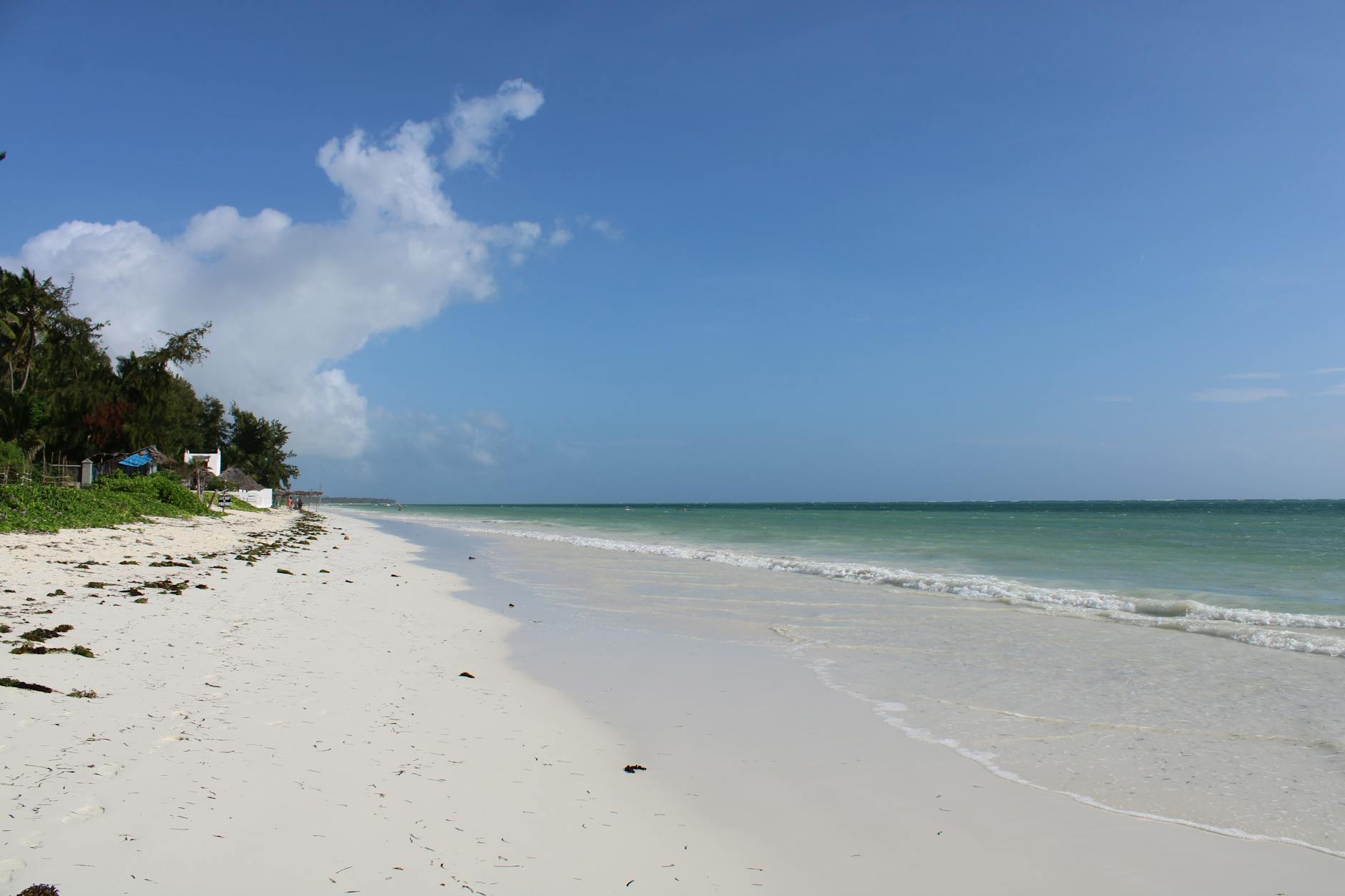
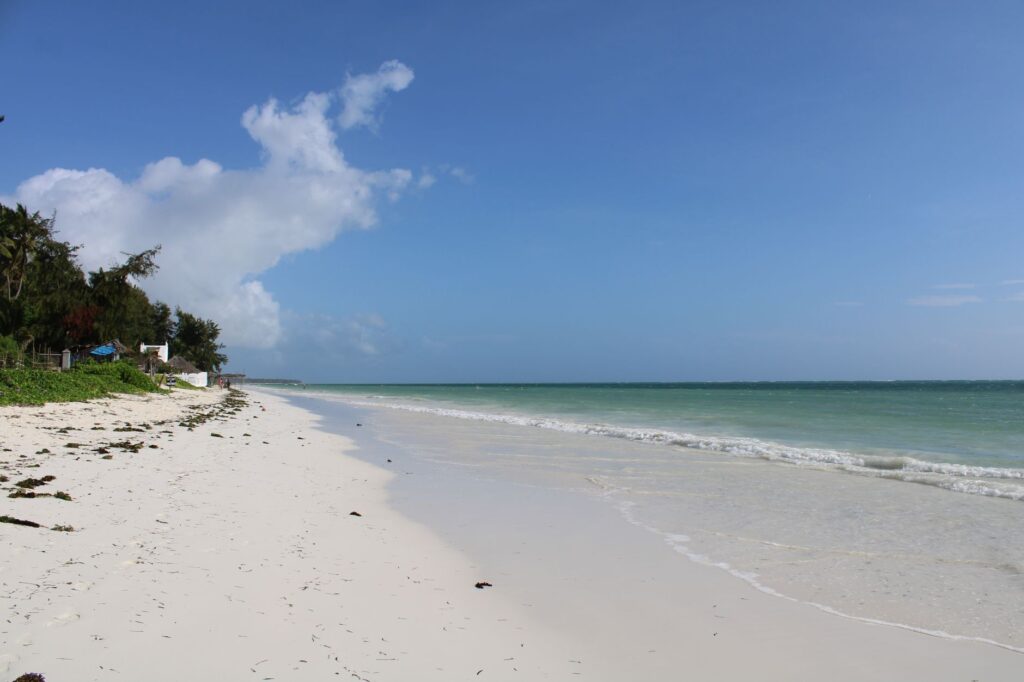
Zanzibar is the natural close — the spice island an hour by charter from the Serengeti airstrip, the coral old town of Stone Town a UNESCO site, the northeast beaches the right decompression after days of early starts and game drives. The beach-and-bush combination is the complete East Africa trip, and Tanzania is the country that does it most efficiently.