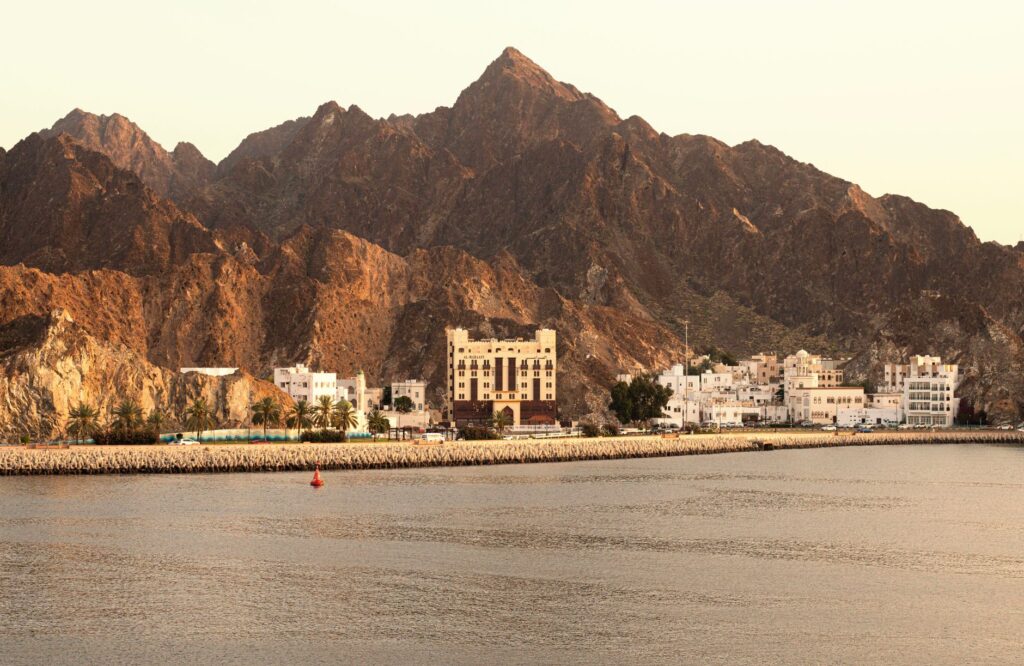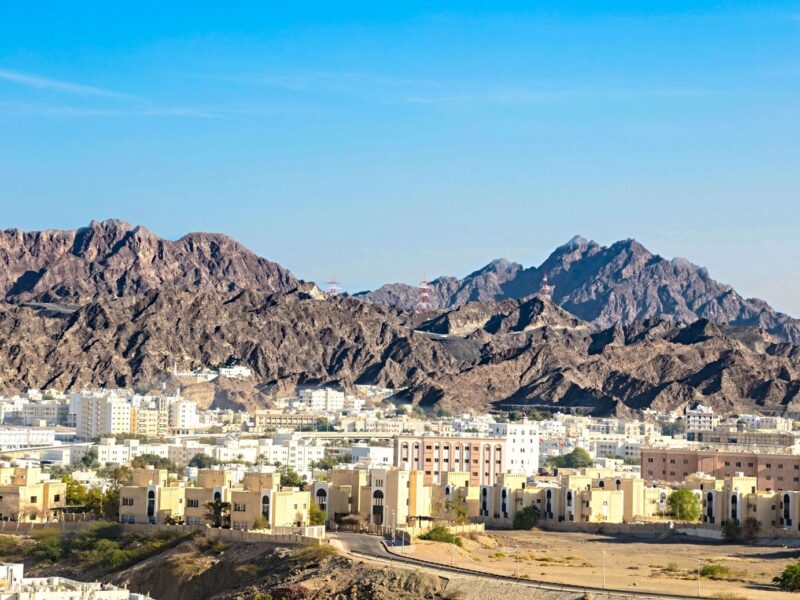

Oman is what the Gulf looked like before it decided to build the future in a decade. Muscat is a low-rise city by law — no towers, the skyline broken only by mosques and the Al Hajar Mountains — and the effect is of a place that has remained somewhere rather than becoming something. The old souk in Mutrah, the Sultan’s Palace on the waterfront, the frankincense in the air on a still evening: these are not recreations. They are simply what Muscat is, and they are the reason the country has the reputation it does among travellers who have been everywhere and are looking for somewhere that hasn’t tried to be the same as everywhere else.
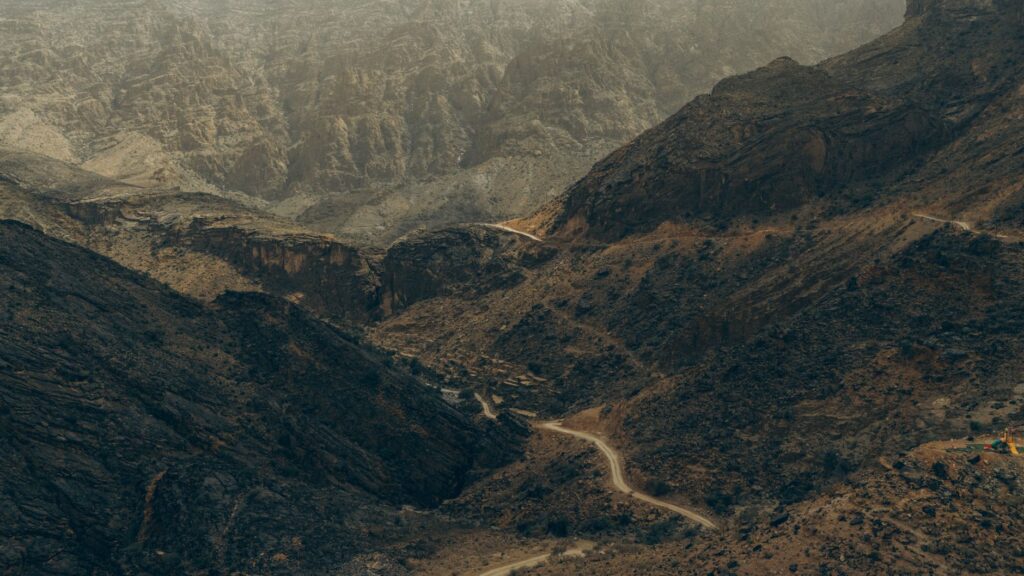
The pairing that earns Oman is Muscat plus Jebel Akhdar. The Hajar mountain range rises to over 3,000 metres an hour from the capital, and at the top, at 2,000 metres, the Alila Jabal Akhdar sits on a cliff edge above a gorge that drops 1,000 metres below the pool. The rose gardens that have been here for centuries bloom in March; the village of Birkat Al Mawz at the mountain’s base is the most beautiful settlement in Arabia. The temperature at altitude is fifteen degrees cooler than the coast, which matters in any month but particularly on shoulder-season trips when Muscat is already warm. The road up requires a 4WD for the final section, which all the lodges arrange, and the transfer from Muscat takes around two hours. Most clients add one or two nights here and leave with it as the clear favourite of the trip.
Oman connects naturally with Dubai — three nights in Dubai, four in Oman, or the reverse, is the Gulf circuit that shows both sides of the Peninsula rather than treating the UAE as the whole story. For the traveller who has done Dubai and wants to understand what the region is beneath the surface, Oman is the answer. For the traveller who has done neither, the combination is one of the most satisfying short international trips possible from India.