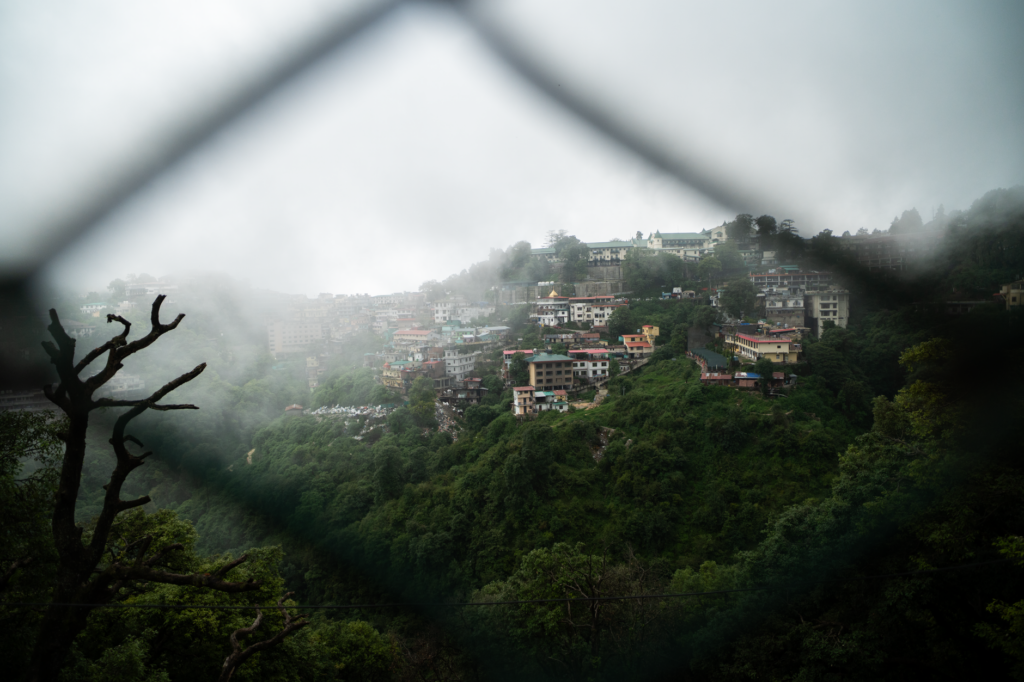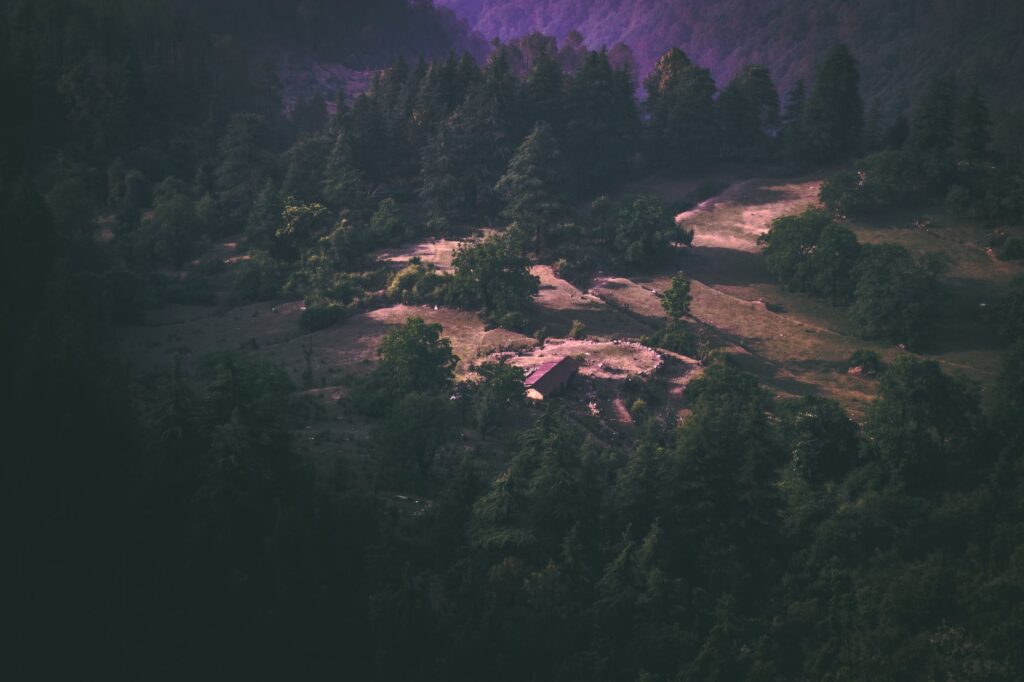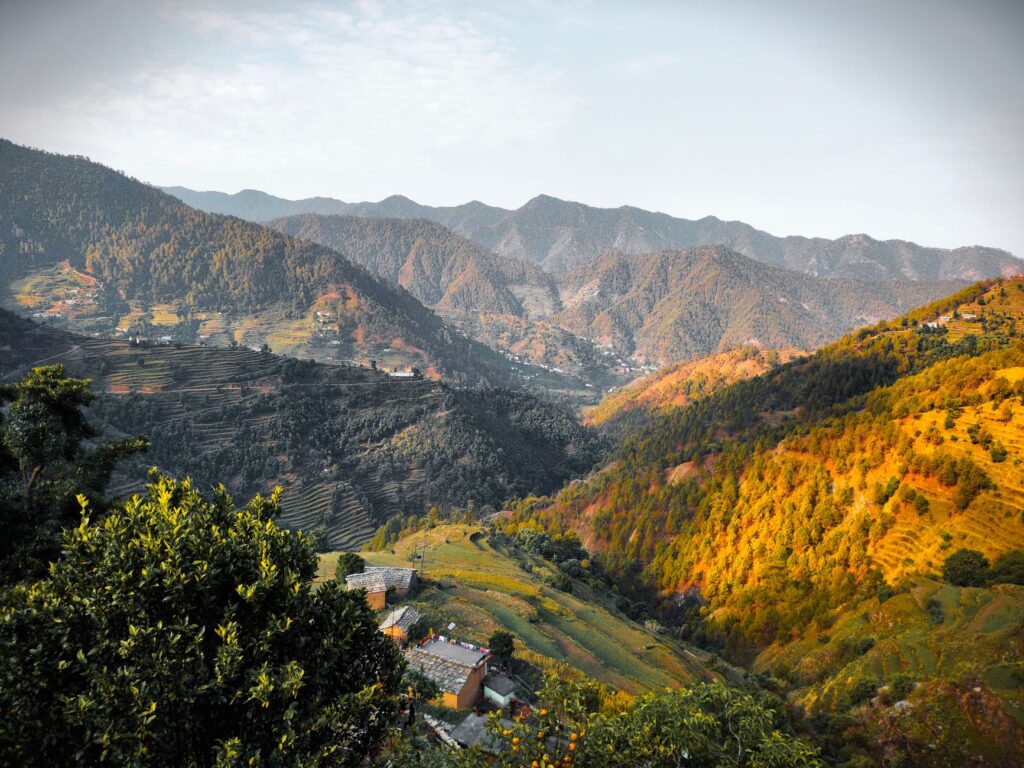

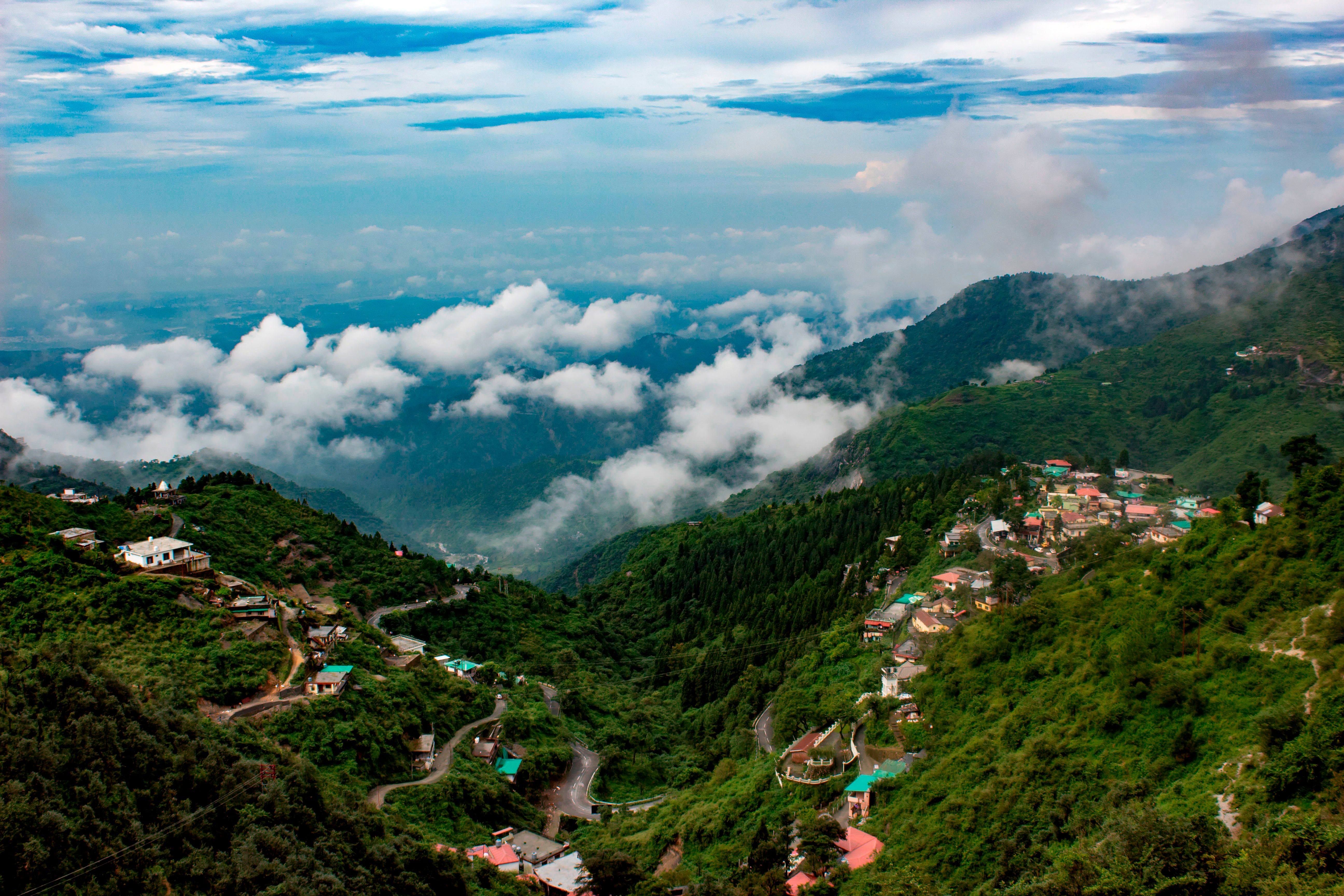
Dehradun and Mussoorie are the Himalayas for people who cannot easily take three weeks. The Jolly Grant Airport is 45 minutes from Delhi by air, and the road to Mussoorie is an hour above that — you can leave Delhi after breakfast and be on the ridge with the snow peaks visible by lunch. The Doon Valley below is wide and green and comparatively cool even in summer, the kind of relief that is genuinely different from an air-conditioned hotel room in the plains.
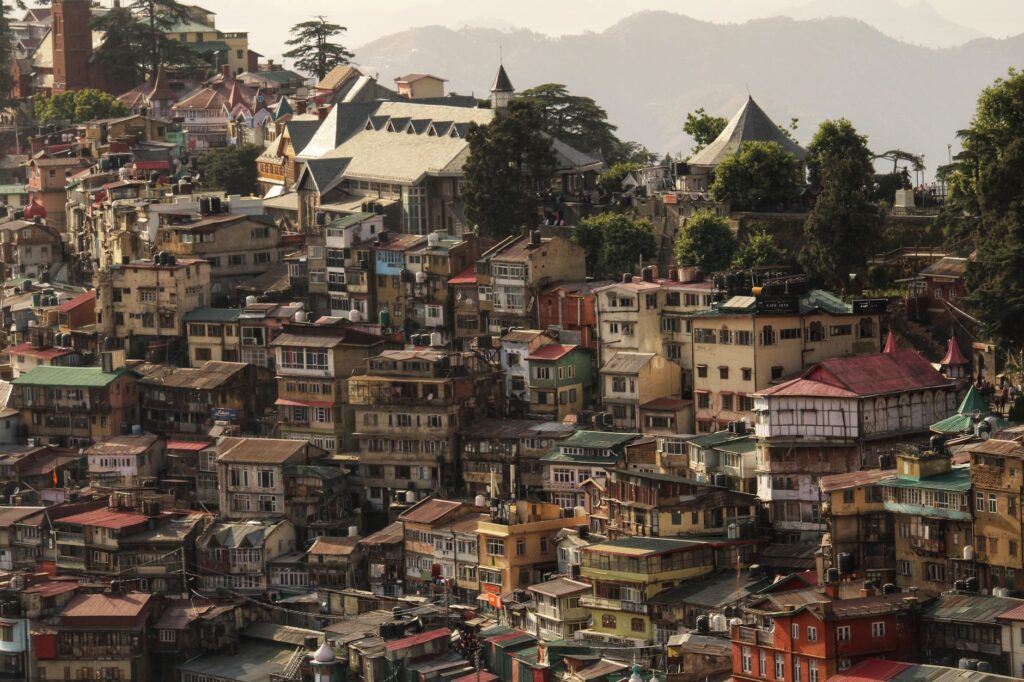
Mussoorie is the hill station proper — the ridge at 2,000 metres, the Mall Road that the British built and the Indians have continued to use for exactly the same purpose (walking in the evening, buying things, seeing and being seen), the cable car to Gun Hill, the Landour neighbourhood above the town where Ruskin Bond has been living and writing about these hills for six decades. The views of the Garhwal range from the Camel’s Back Road on a clear October morning, the snow peaks appearing above the ridge in sequence as you walk west, are genuinely stopping. The hill stations are an acquired taste — they are colonial in origin and popular in ways that can feel overwhelming in peak school-holiday season — but at the right time of year and from the right property, they deliver a version of India that is not available in the plains.
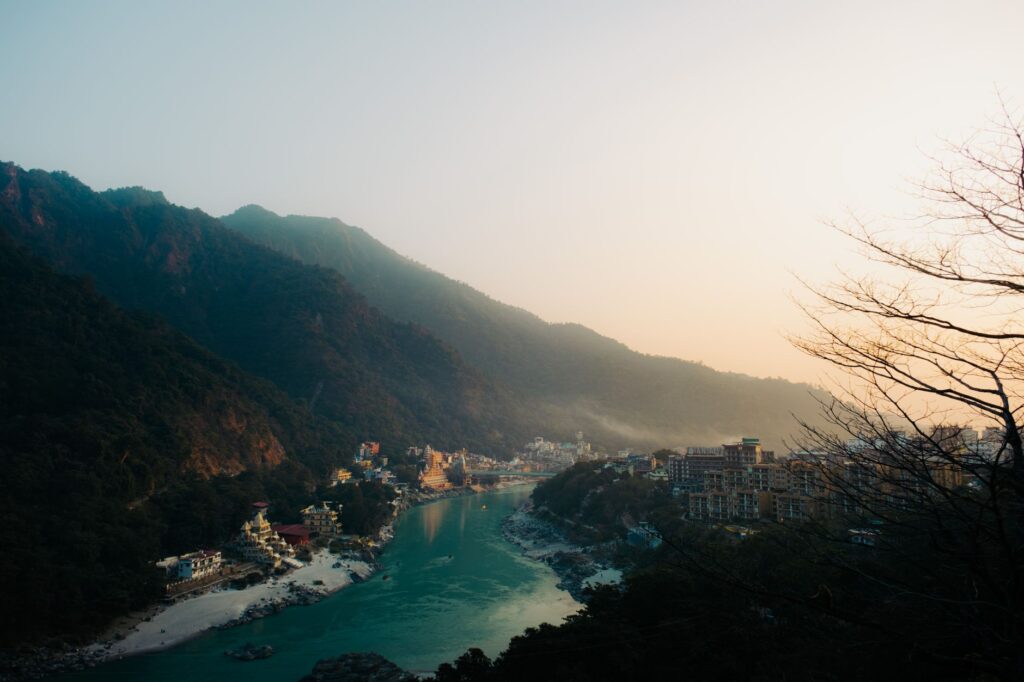
Dehradun itself is the base for travellers who want the valley rather than the ridge: the Forest Research Institute (a vast and beautiful colonial building with 1,600 acres of woodland), the Robber’s Cave, the Indian Military Academy that has trained officers for seventy years, and the straightforward gateway logistics for Rishikesh (45 minutes) and the Char Dham pilgrimage circuit (which begins at Haridwar, an hour away).