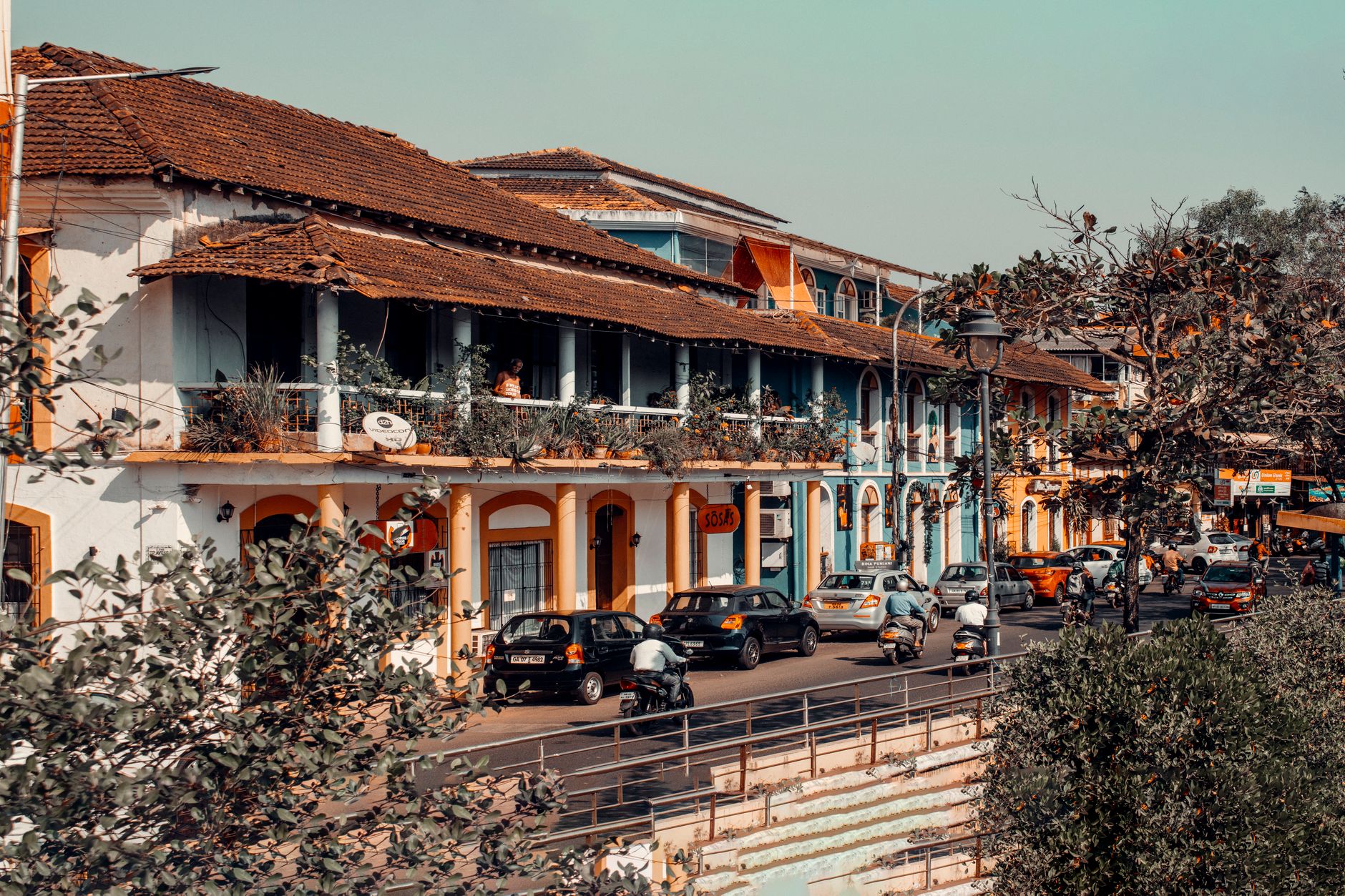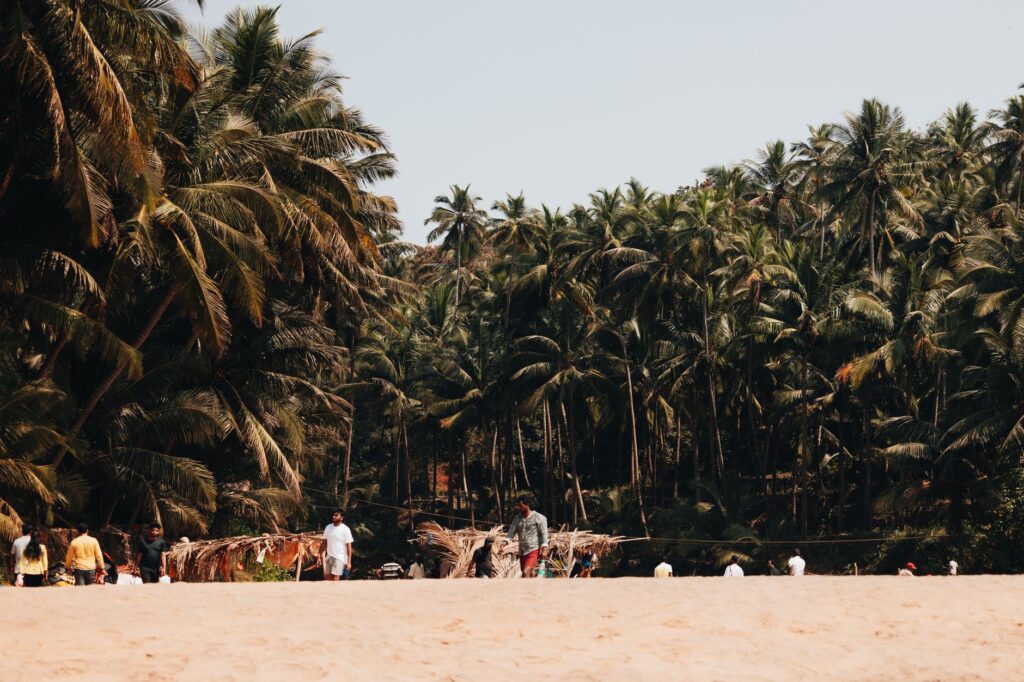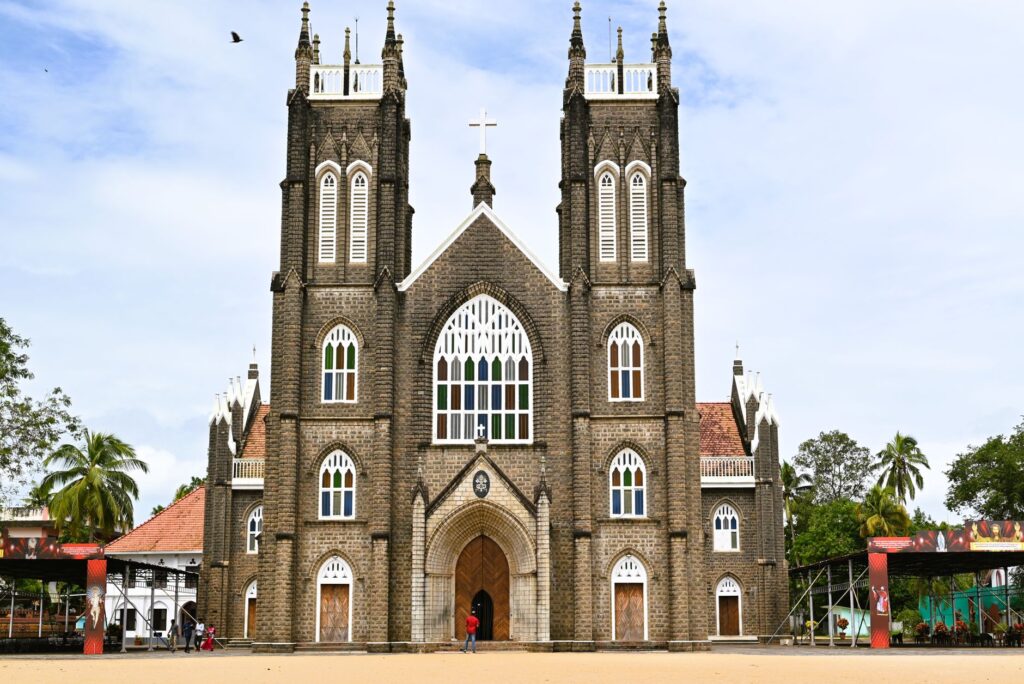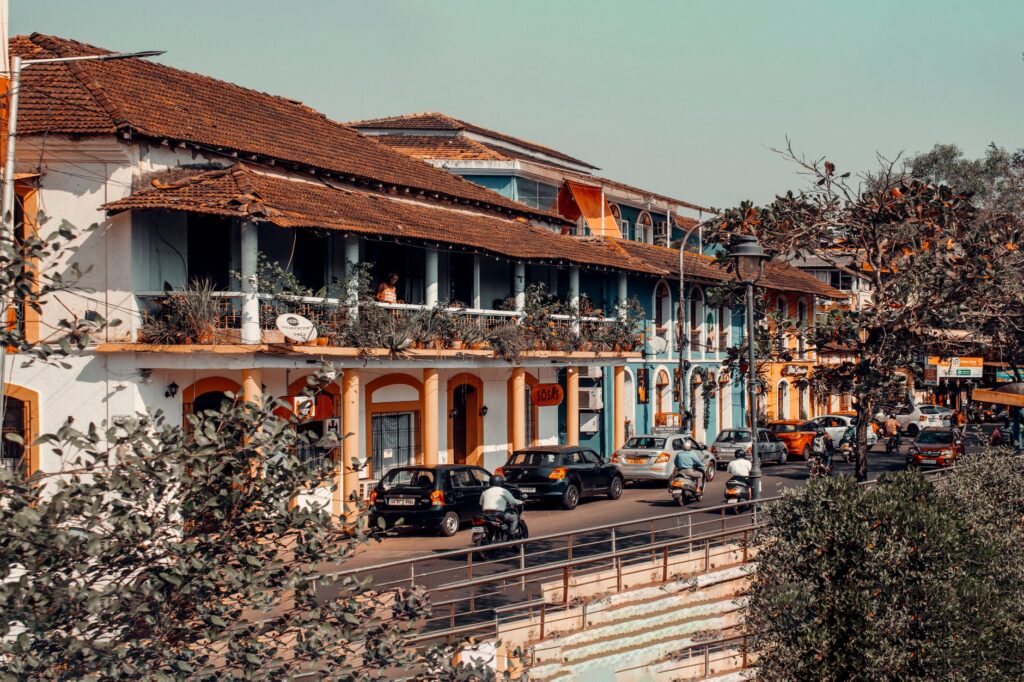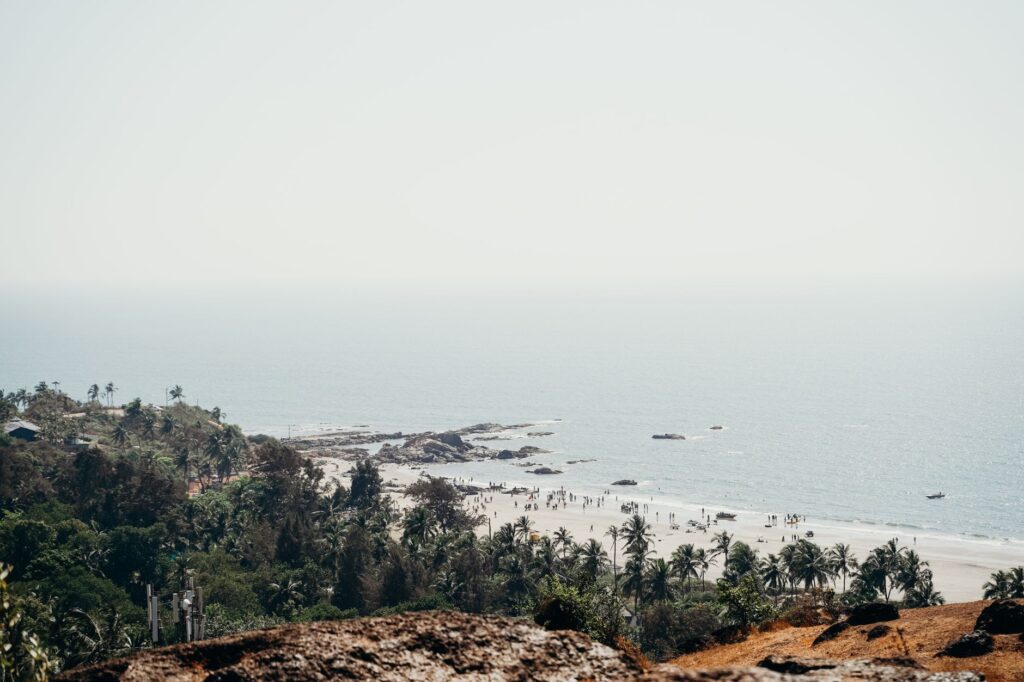

Goa is the holiday India takes with itself, and it has been perfecting the format since the Portuguese left in 1961. The beaches — stretching south from Querim to Palolem along the Arabian Sea — are genuinely excellent: wide, warm, less crowded than you expect in peak season if you choose the right stretch, and backed by the most developed resort infrastructure in the country. The food is the other reason: Goan cuisine runs on coconut milk, tamarind, and the sea, and the best restaurants in Anjuna and Assagao now compete with anything in Mumbai or Delhi. Add the Portuguese-era architecture — the Latin Quarter tiles in Panjim, the Baroque churches at Old Goa that are larger than anything the colonisers built in Lisbon — and Goa becomes something more than a beach.
The north-south question is the one the trip is built on, and it is more consequential than it looks from a map. North Goa is the Goa of the eighties and nineties flea market mythology, now gentrified into something more sophisticated: the design boutiques along the Anjuna road, the farm-to-table restaurants in Assagao, the cliffs at Vagator where the W Goa hangs above the sea. It is animated, creative, and loud after ten. South Goa is composed, the beaches are wider, the Taj Exotica sits on its own private stretch at Cavelossim with no other development in sight, and dinner is earlier. Both are right; they require different guests.
Goa works most naturally as the close of a longer India trip — the beach after the desert, the seafood after the thali, the holiday after the holiday. Arriving in Goa after Rajasthan is the arrival that earns the beach. Coming straight from Delhi makes it feel like Goa could be anywhere.