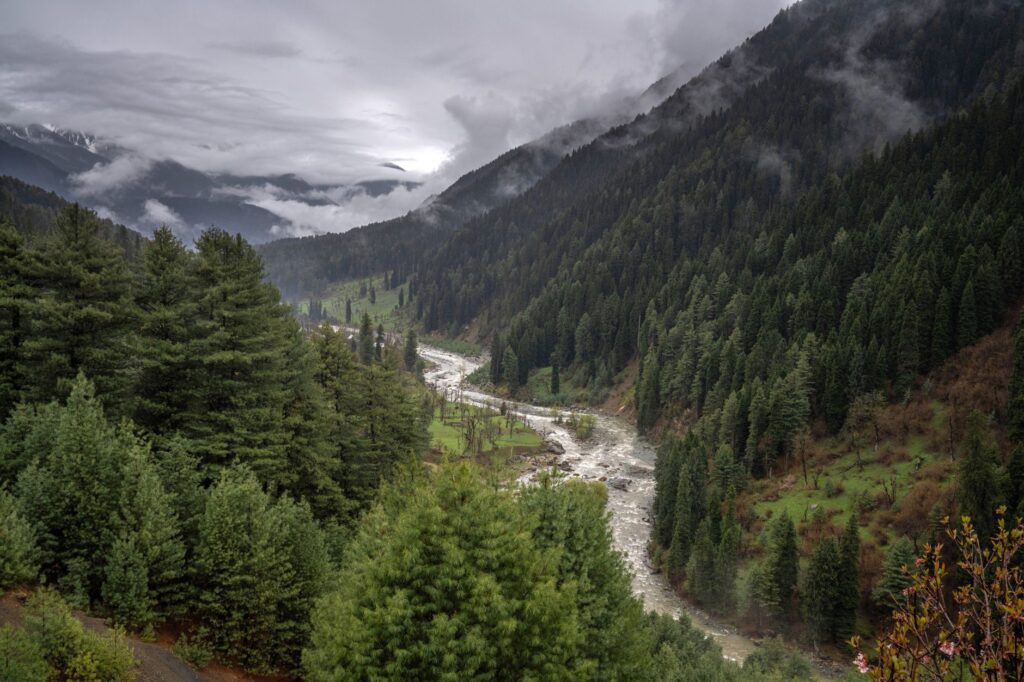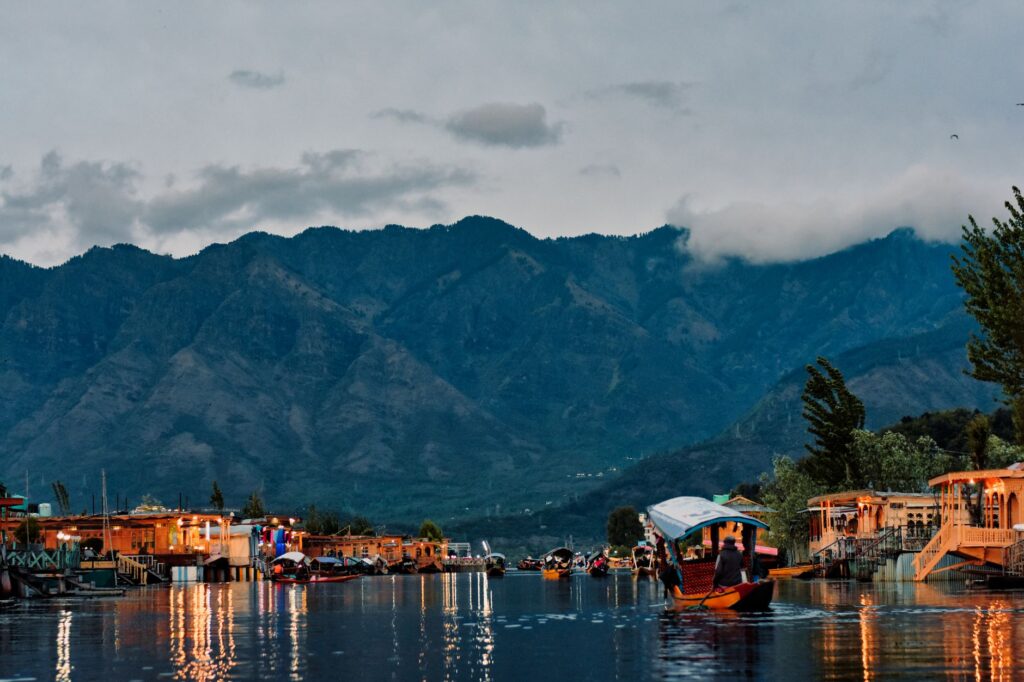

Kashmir has been described as paradise so many times, and by so many sources — the Mughal emperors who built their gardens here, the British viceroys who summered on the lake, the poets in Persian and Urdu who spent centuries trying to describe it — that the description has almost become meaningless. Then you see Dal Lake at dawn for the first time, the shikara barely moving across water the colour of old pewter, the snow peaks appearing above the mist as the light rises, and the cliché reassembles itself into something earned. The lake is extraordinary. The landscape is extraordinary. The valley’s position — enclosed by the Pir Panjal range on one side and the Great Himalayas on the other, 1,585 metres above sea level, cooler by fifteen degrees than the plains in summer — is what drew every empire that ever controlled the subcontinent to spend its summers here.
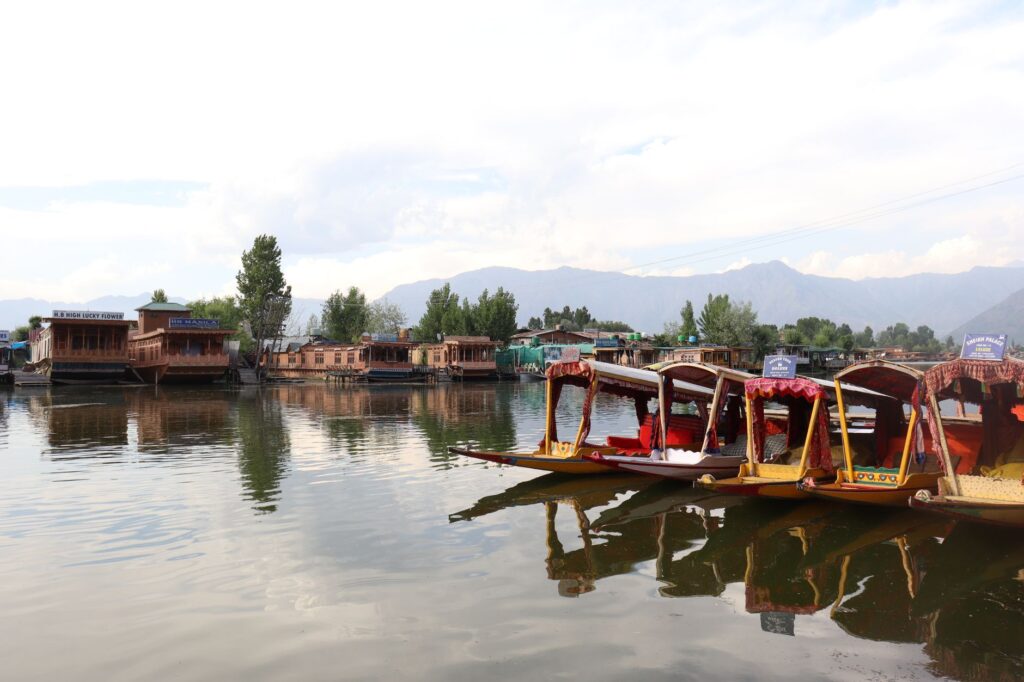
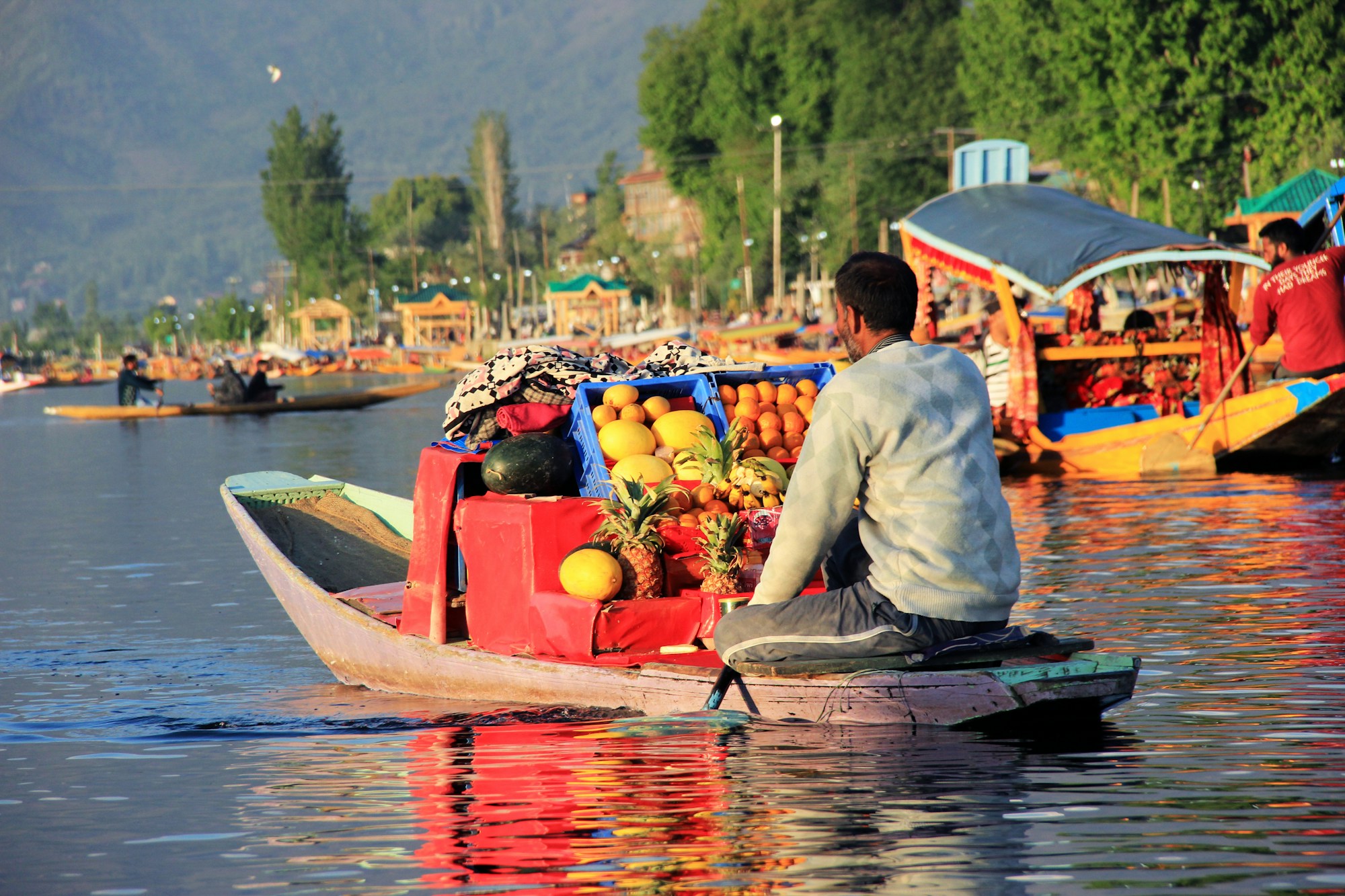
The Dal Lake experience is organised around the shikara — the wooden boat that is the primary transport, the vegetable market at dawn, the floating gardens where lotus and wax gourd grow directly on the water, the flower-sellers and the walnut-carvers who pull alongside your houseboat in the evening. The houseboats themselves are a category that exists nowhere else in Indian accommodation: full cedar-and-walnut floating houses with proper rooms, dining tables, and private decks, moored in the lake and reached by shikara. A night on a good houseboat — WelcomHeritage Pamposh is the quality benchmark — is the accommodation experience most specific to Kashmir, and the Lalit Grand Palace on the shore is the luxury hotel version, a former maharaja’s palace with the lake and the mountains as its garden.
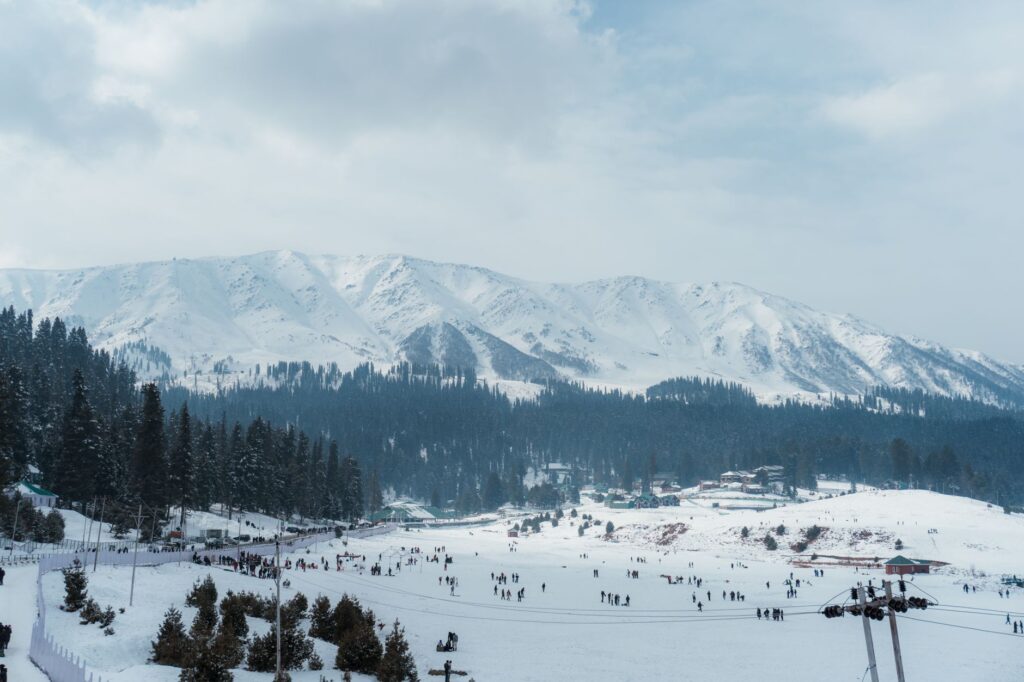
Gulmarg in winter is a separate argument entirely. At 3,050 metres, 50 kilometres from Srinagar, it is the highest ski resort in Asia and one of the genuinely undiscovered high-altitude ski destinations in the world — the powder is real, the gondola reaches 3,980 metres, and the mountain in good conditions is almost completely yours.