
Ladakh is the destination that most rewards the effort of getting there, and the effort is real. The flight into Leh lands at 3,256 metres, which is higher than the summit of any mountain in Western Europe, and the first two days are non-negotiable rest: limited physical activity, extra water, the oxygen bar at the hotel as a precaution, and the acclimatisation that every guidebook mentions and half the visitors ignore until the headache begins at midnight on day two. The medical protocol is built into every itinerary we design here, and it is built first rather than as a caveat at the end — because the experience at altitude is extraordinary, and the altitude itself is implacable.
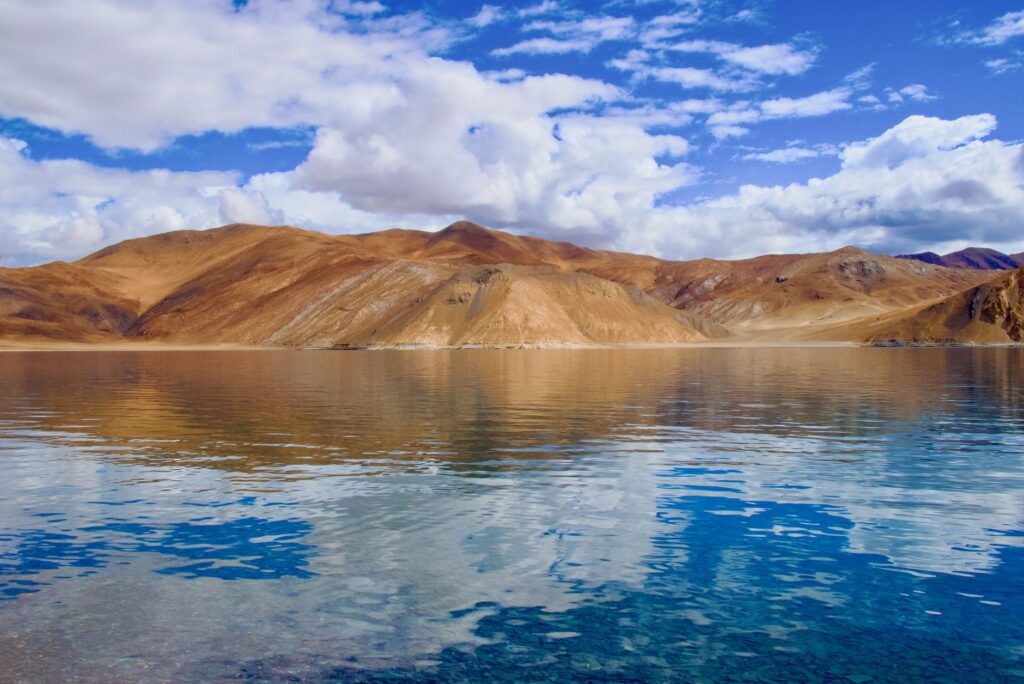
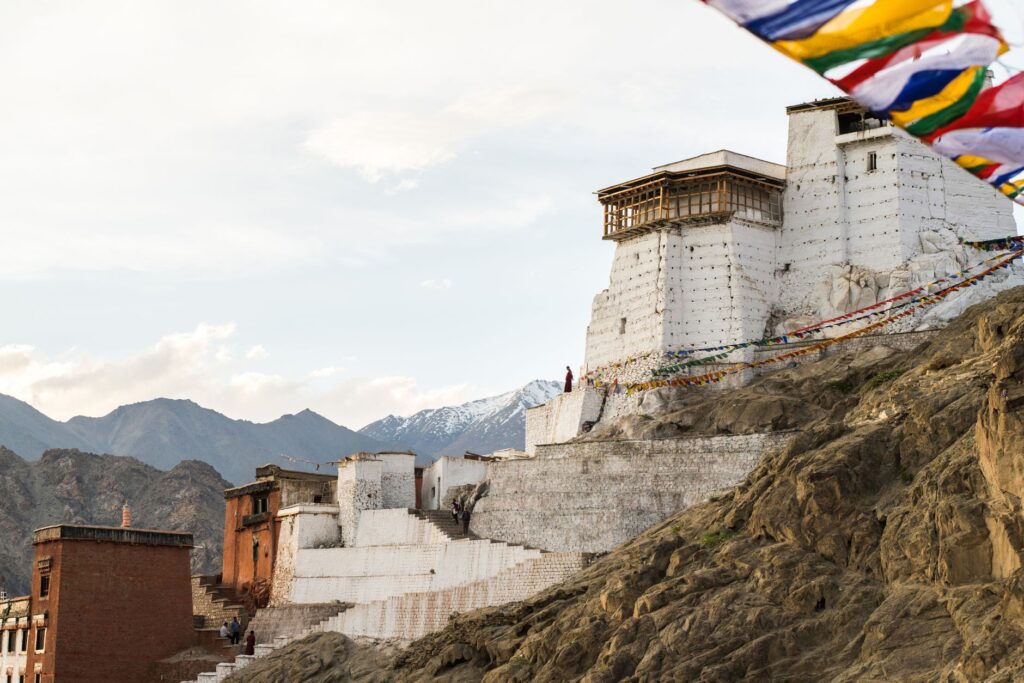
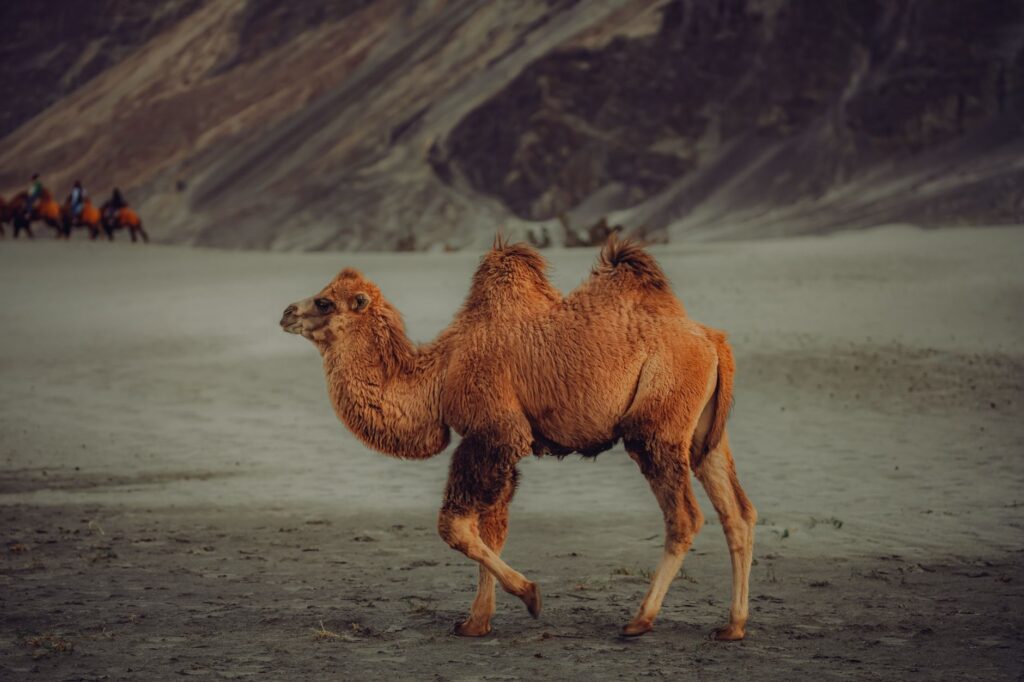
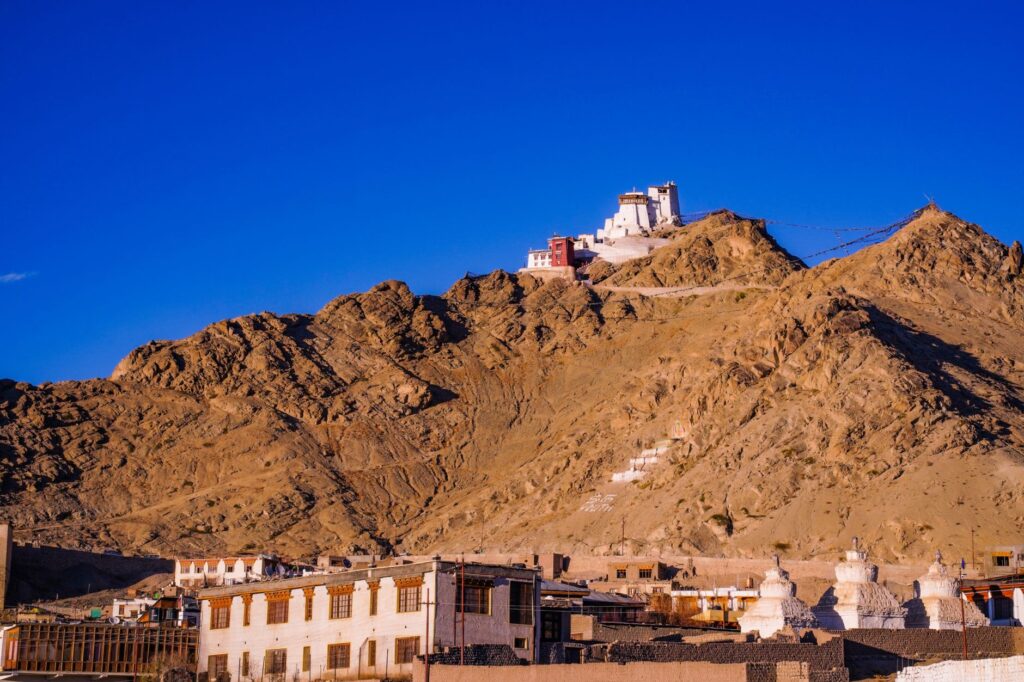
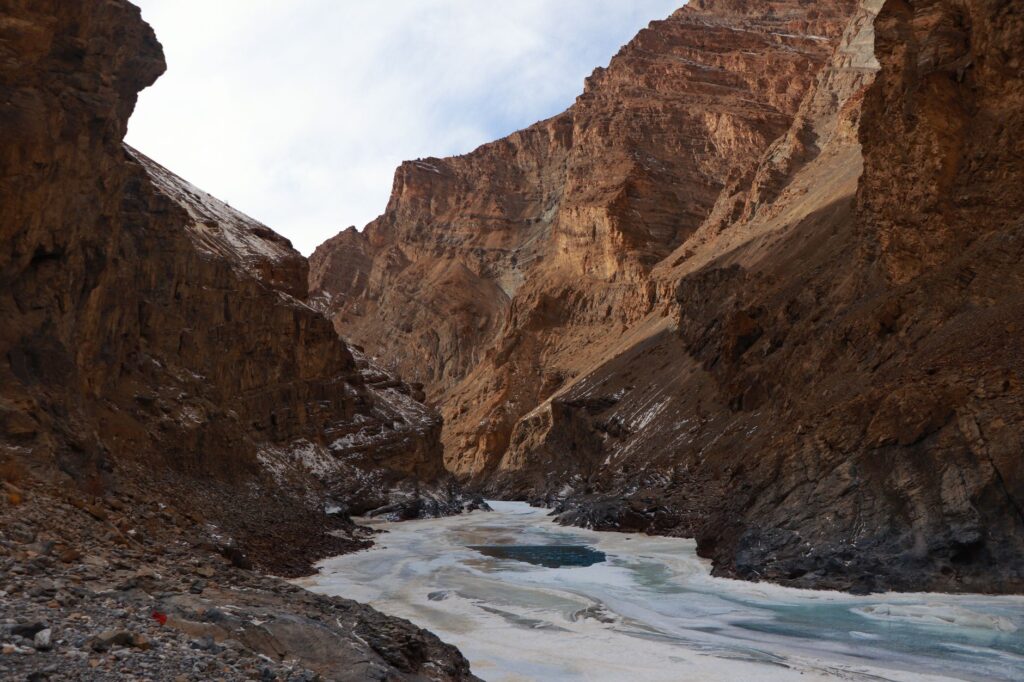
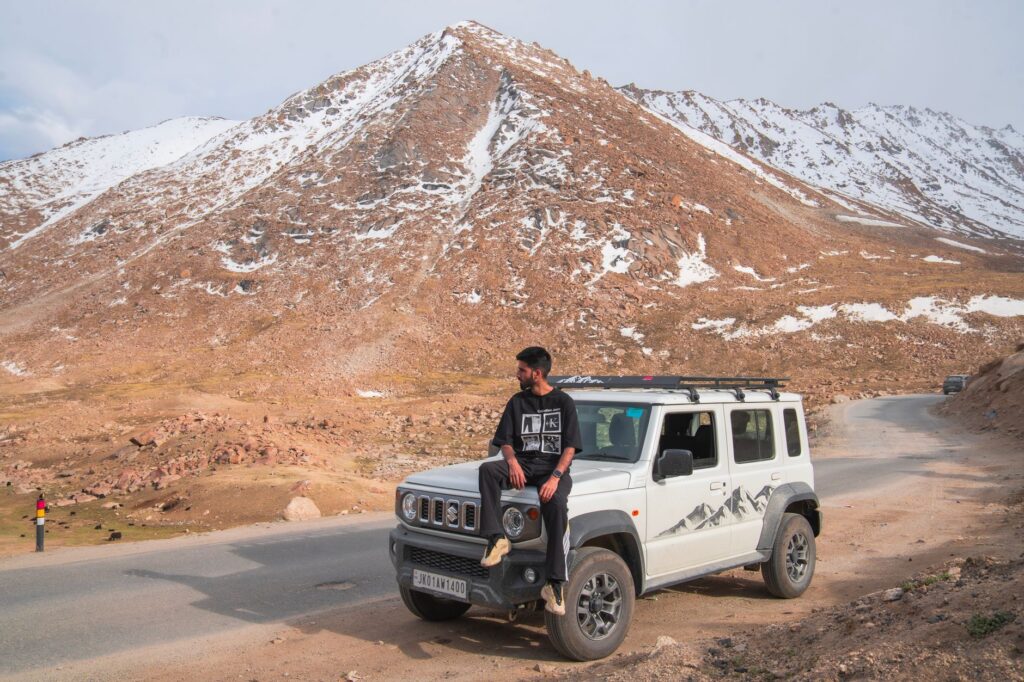
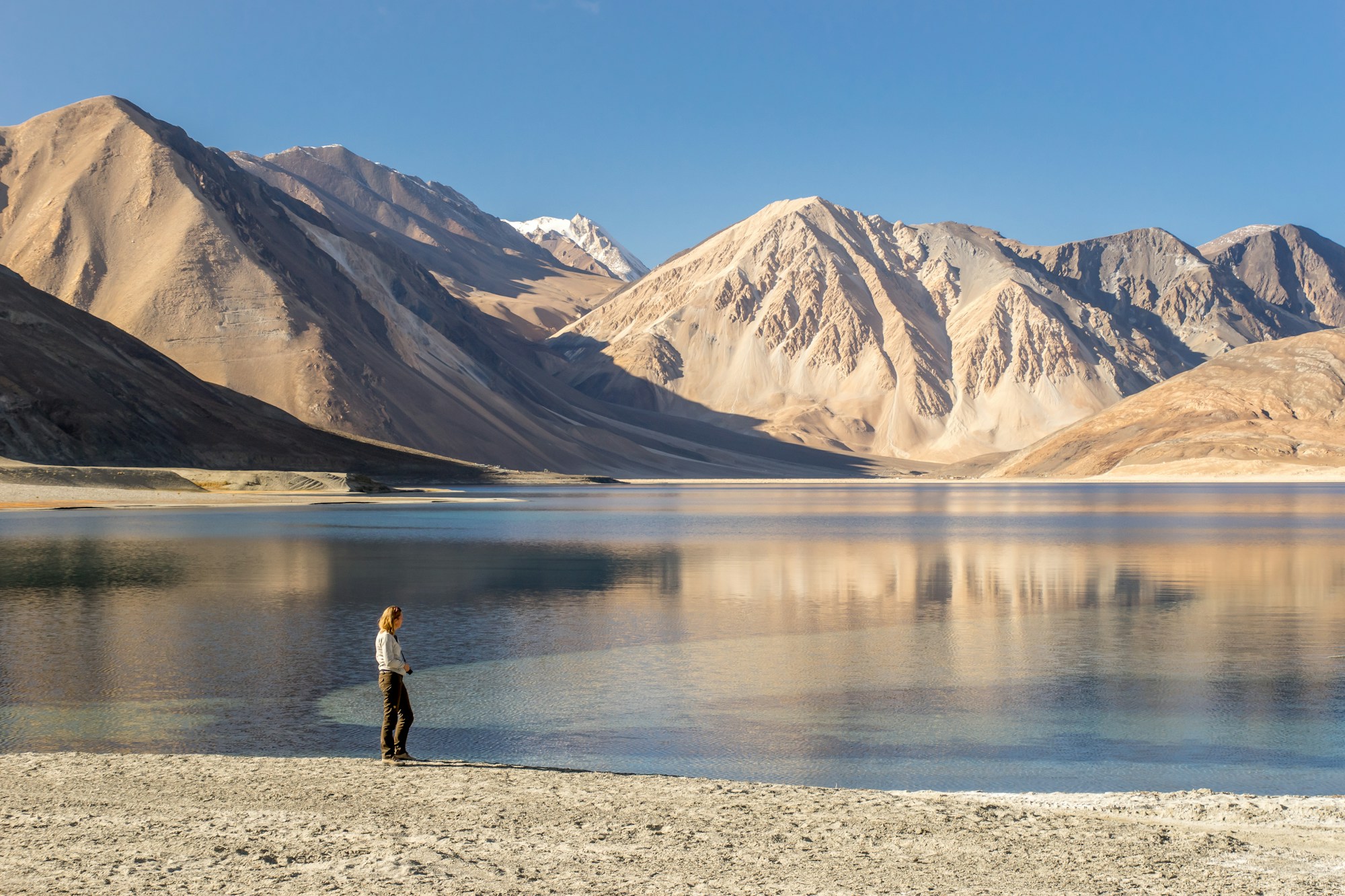
What is on the other side of the acclimatisation is the most other-worldly landscape in India and one of the most dramatic in the world. The Indus Valley at 3,500 metres, broad and flat between the Ladakh Range to the north and the Zanskar Range to the south, with the whitewashed Tiksey monastery on a clifftop exactly where it has been since the fifteenth century. The Nubra Valley over the Khardung La — at 5,359 metres, one of the highest motorable passes on earth, the road descending into a valley of sand dunes where Bactrian camels (the double-humped variety, not the single-humped camel of Rajasthan) have been living since the Silk Road came through. Pangong Lake at 4,350 metres: 134 kilometres long, a third of it in China, the water shifting from blue to turquoise to green to violet as the light moves across it and the wind lifts the surface into different textures. These are not metaphors. The photographs look edited; they are not.
The monastery circuit is the cultural layer: Alchi in the 11th century, Lamayuru in the moon landscape above the Indus gorge, Hemis in the hills above Leh where the Hemis Festival brings monks in demon masks to the courtyard each June. The Shakti village walk — staying in guesthouses in Ladakhi villages, walking the mountain paths between them — is the most immersive version of Ladakh, the one that puts you inside the landscape rather than passing through it.