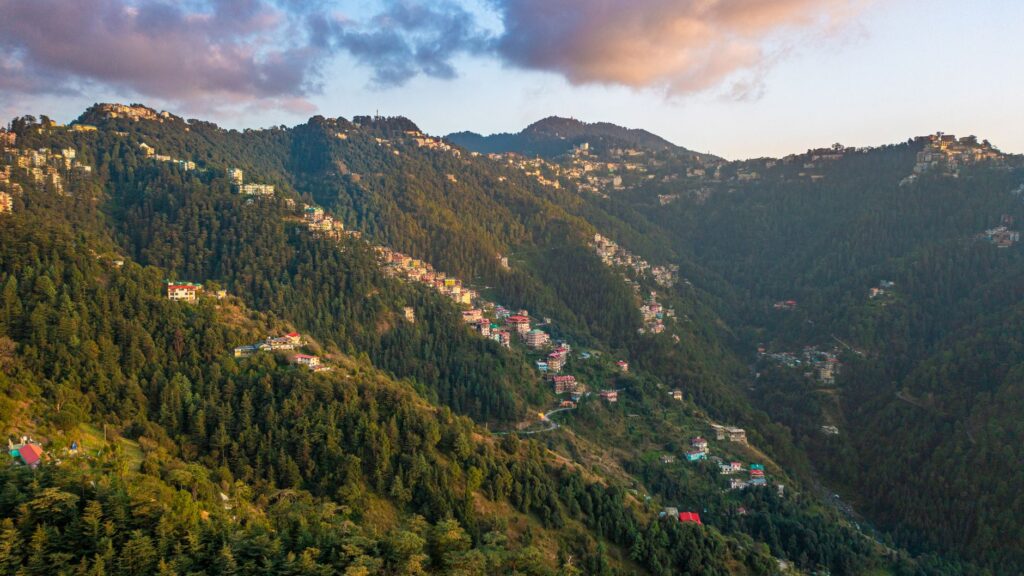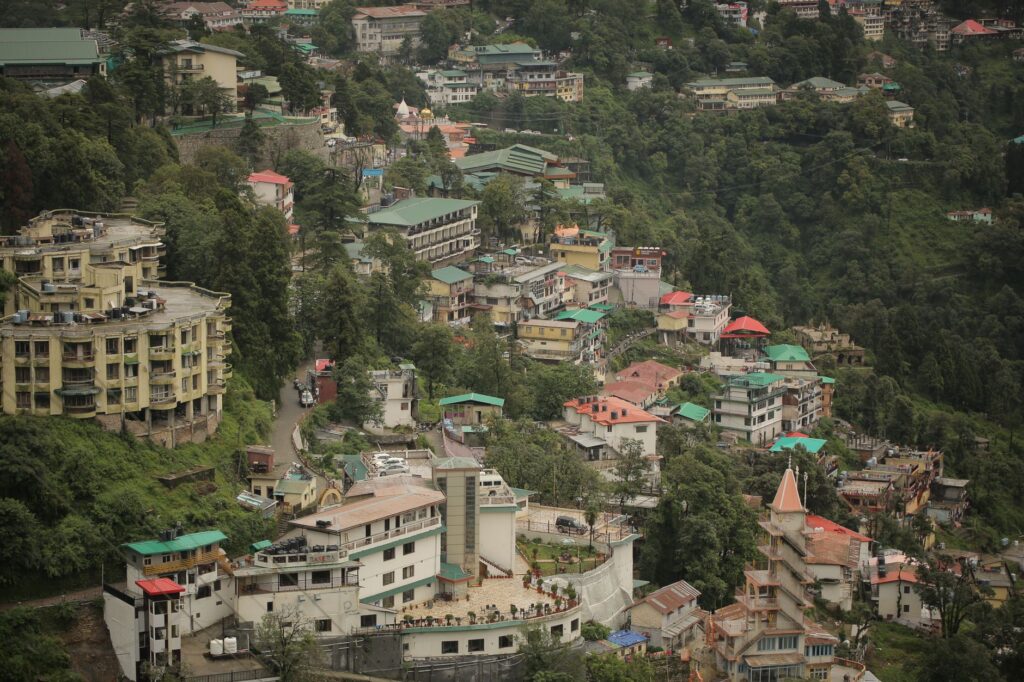

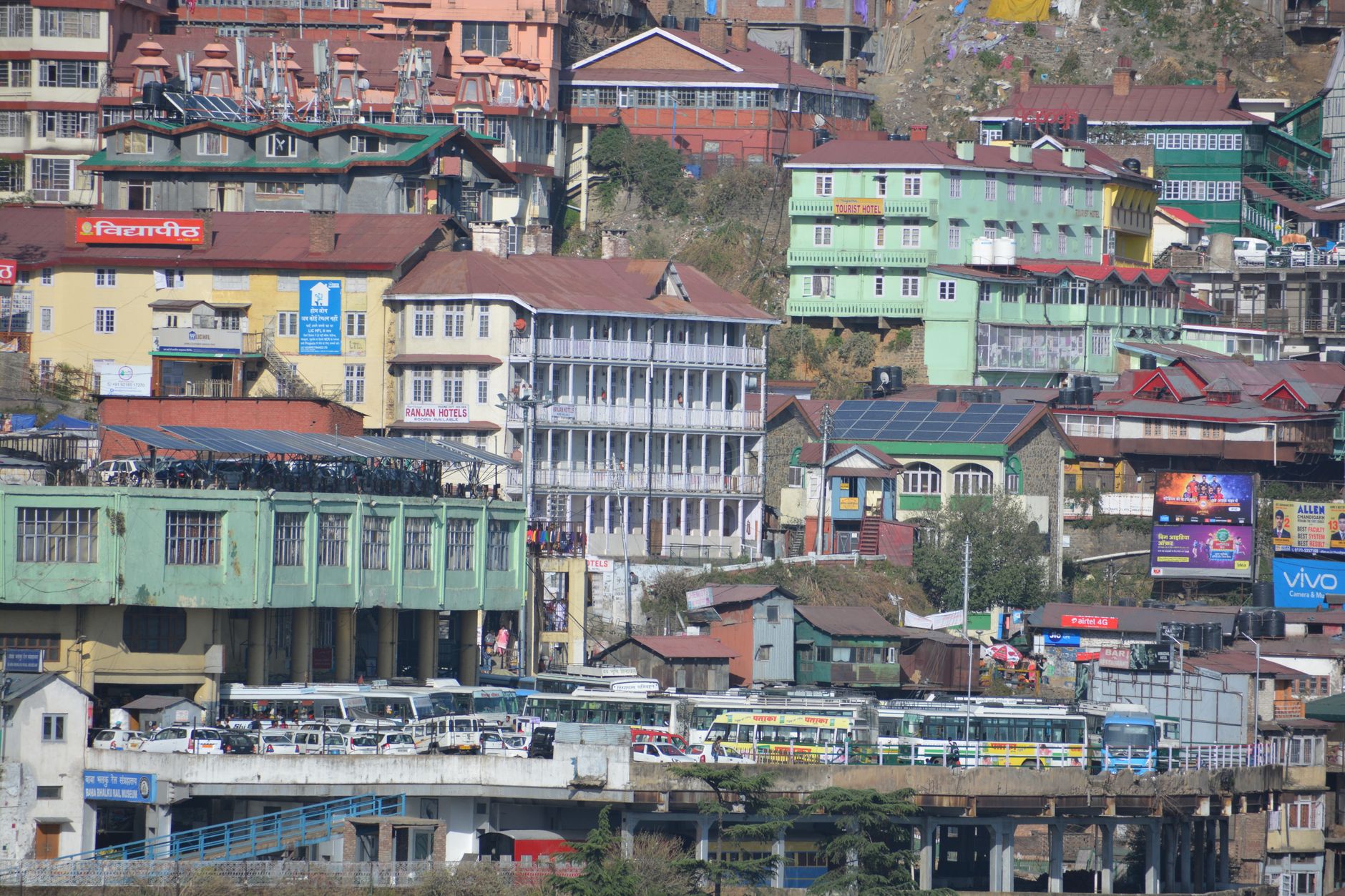
Shimla is the place that India inherited from the British and made entirely its own without quite dismantling anything. The Viceregal Lodge still stands on Observatory Hill — a Scottish Baronial building that the Viceroy of India used as a summer residence, where the partition of British India was negotiated in 1947 and where, today, academics give papers in the former ballroom. The Mall Road is still pedestrian-only, which gives the town a promenade quality that resists the car culture of the plains below. The Christ Church still rings on Sundays. And the Kalka–Shimla Railway, opened in 1903 to carry the whole apparatus of imperial government into the hills each summer, is still running on the same track, through the same 102 tunnels, at roughly the same speed — because there is no reason to go faster on a journey that is the point.
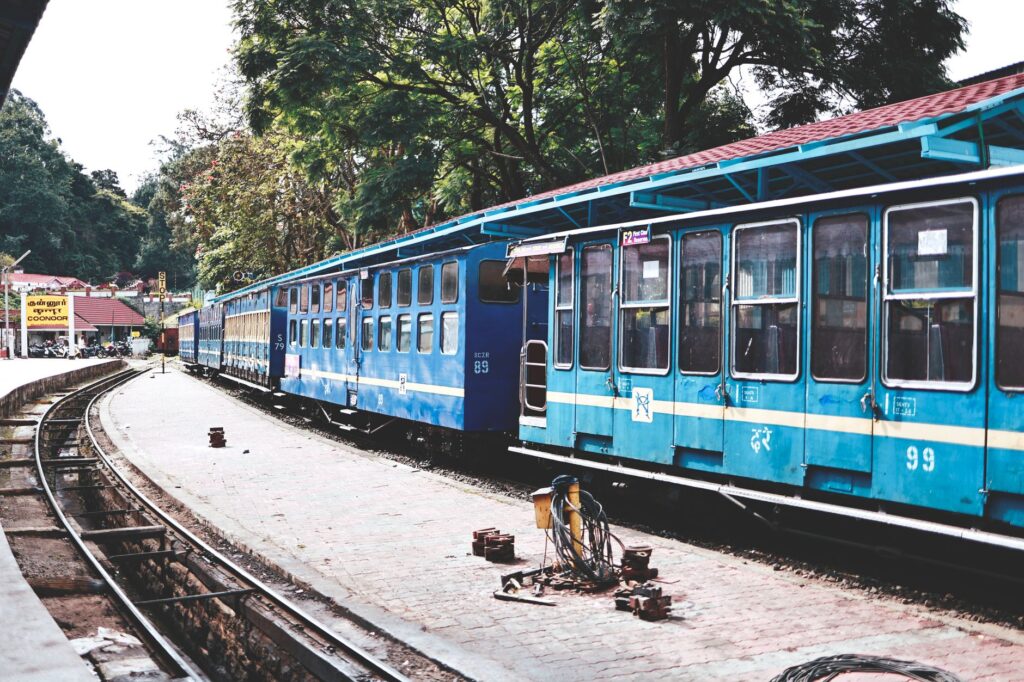
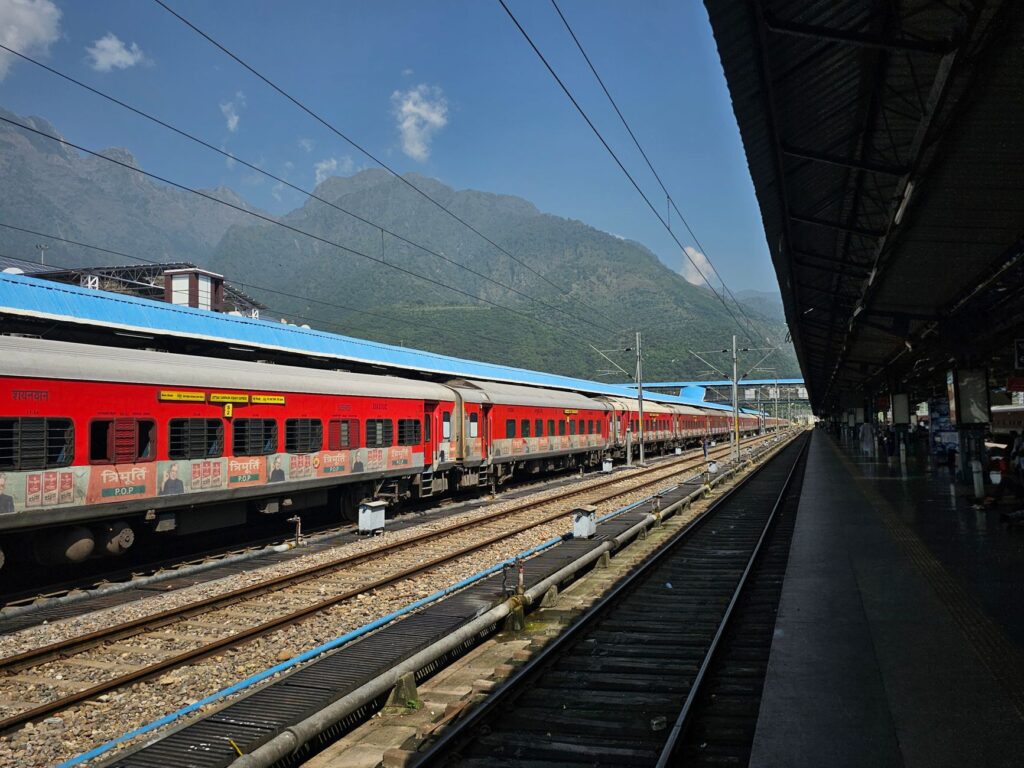
The toy train is the single most argued-about travel experience in Himachal Pradesh, and the argument is worth resolving simply: take it. Five hours is a long time to be in a narrow-gauge coach, and the train is not comfortable in the modern sense. But the experience of climbing 1,400 metres through pine forest, around hairpin curves, over stone viaducts that were built by hand in 1901, watching the valley drop further below at each tunnel exit — this is transport as landscape, and the UNESCO heritage designation is not honorary. Book the Shivalik Deluxe Express rather than the slower Himalayan Queen; the Shivalik has observation windows and a dining car.
Wildflower Hall in Mashobra, 13 kilometres above Shimla in the deodar cedar forest, is the property that resolves the tension between wanting the hill station and wanting the quiet. It was built on the site of the Commander-in-Chief’s former summer residence, and its position — in the forest rather than on the ridge, with the valley visible below and the cedars tall overhead — produces a different Shimla from the Mall Road version. The spa is genuinely good, the walks from the property run directly into the Himalayan forest, and the snow in winter sits in the branches rather than on a pavement.