

Journal · How it works
The inspection
Before a hotel earns a place in the directory, someone has to walk it — not as an inspector being shown the best of everything, but as an ordinary guest seeing the Tuesday version. A first-person account of how a property actually gets vetted.
The most useful way to inspect a hotel is to not announce that you’re inspecting it. So when I went to look at a newly opened property on a stretch of coast I book often — a place getting a great deal of attention, which is exactly when a hotel is most worth checking and least worth trusting — I booked it the ordinary way, under my own name, at the standard rate, as any guest would. I wanted the Tuesday version. The version a hotel produces for a known advisor on a site visit, walked through by the general manager past the best of everything, is a useful thing to see. It is not the thing your client will experience on a random night in October, and the gap between the two is precisely what an inspection is for.
A property earns its place in the directory the hard way, and this is what the hard way actually looks like, hour by hour.
Check-in is the first data point
It starts before the room. I time the arrival deliberately for the busy window — early afternoon, when departures are still clearing and the front desk is under mild pressure — because how a hotel checks you in when it’s slightly stretched tells you more than how it does at a serene ten in the morning. I’m watching ordinary things. How long until someone acknowledges me. Whether the person checking me in is harried or present. Whether they offer anything — a sense of the place, a question about the stay — or simply process a transaction. Whether the lobby, at its busiest, feels like a place you’d want to sit, or a thoroughfare you’d want to escape.
None of this is in any review in a form you can trust, because reviews are written by people having a good day or a bad one. What I’m building is a baseline: this is how this hotel behaves under normal load, to a guest it has no particular reason to impress.
The room, and the rooms I’m not in
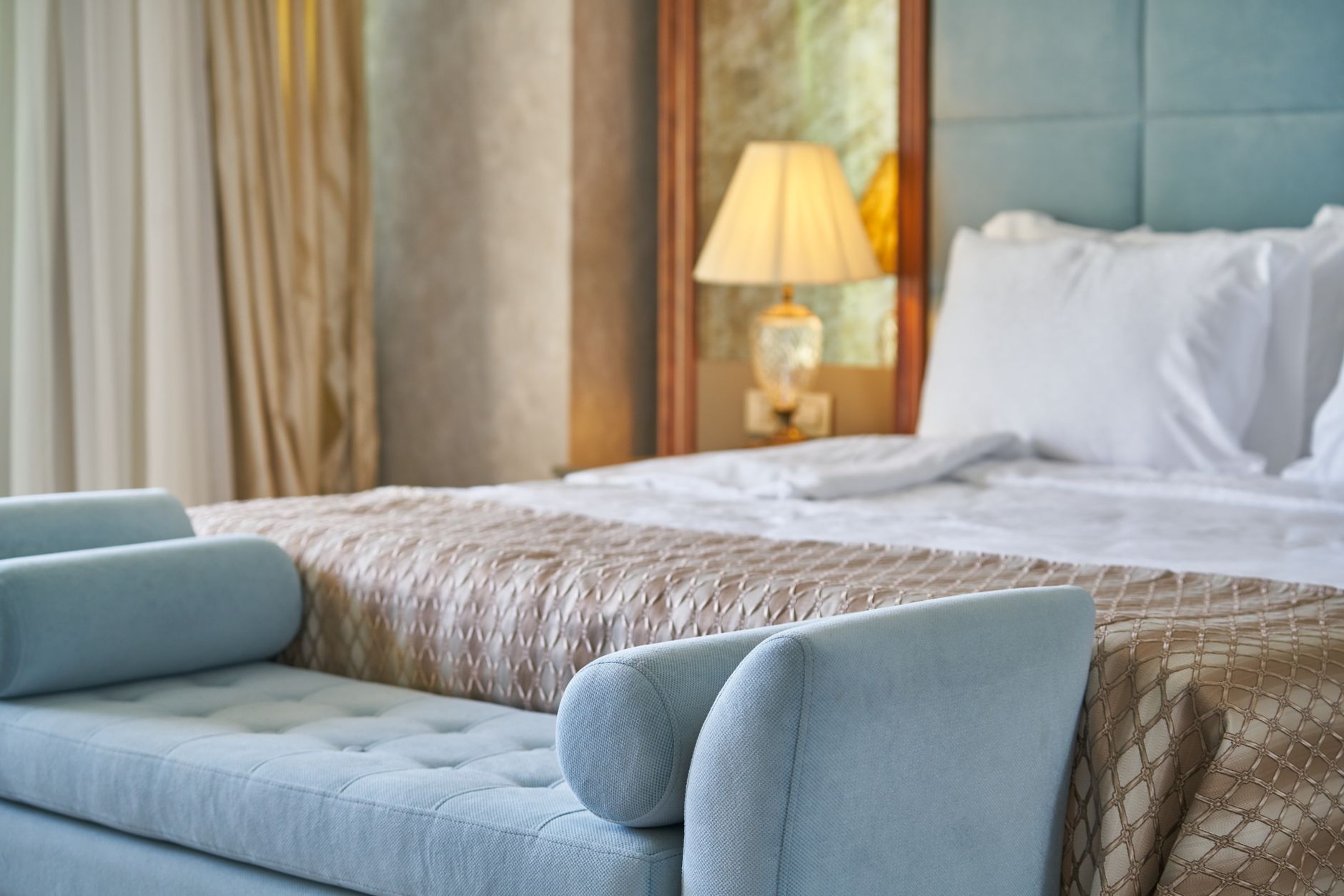
Then the room — and here the first rule is to never accept that the room I’ve been given is representative, because at a hotel being inspected it usually isn’t. I book an entry-level category on purpose, because the entry-level room is what most guests actually stay in and the suite is what the photographs sell. The standard room is the honest room. If it’s good, the hotel is good; if only the suites are good, the hotel is a suite with a lot of disappointing rooms attached.
I look at the unglamorous things. The bathroom — water pressure, whether the finishes are genuine or a thin layer over something cheaper, whether it’s been cleaned to a standard or merely tidied. The bed, actually slept in for a night rather than admired. The noise: I open the window and listen, because a beautiful room over a service road or a late-night bar is a room people remember for the wrong reason. The light: which way the room faces and what that means at the hours you’d be in it. And then I ask, the next morning, to see other categories — the sea-view room, the next tier up, the suite — because the single most useful thing I can know about a view-hotel is how many rooms actually have the view and how big the gap is between the ones that do and the ones that don’t. That gap is what determines whether I can book this place without specifying the exact aspect in writing, or whether sending a client here on a generic rate is a lottery.
I book the entry-level room on purpose. The standard room is the honest room. If only the suites are good, the hotel is a suite with a lot of disappointing rooms attached.
Breakfast is the great revealer
If I had to judge a hotel on one meal, it would be breakfast, and not because breakfast is the most important meal but because it’s the hardest to fake at scale. Dinner can be carried by one good chef on a good night. Breakfast, every morning, for every guest, exposes whether the kitchen and the service have depth or are running on a thin top layer. Is the fruit actually ripe or merely present. Are the eggs cooked to order with any care or held under a lamp. Does the coffee suggest anyone thought about it. Is the room replenished and attended, or does it fray at the edges by nine as the staff thin out.
A hotel that does breakfast genuinely well almost always does everything well, because breakfast done well is a sign of operational depth that can’t be costumed for an inspection. A hotel that lets breakfast fray is telling you where its standards actually sit when no one important is watching.
The test of the small unusual request
Somewhere in the stay I make one small, slightly unusual request — nothing difficult, nothing a good hotel couldn’t handle, but something off the script. A particular table. A dietary preference at dinner mentioned casually. A question that requires the staff to think rather than retrieve. What I’m testing is not whether they can say yes; it’s how they handle the space between the standard offering and the specific ask, because that space is where the entire luxury of a hotel lives or dies. The property that meets a small off-script request with genuine ease is one I can trust with a client’s real, particular needs. The one that stiffens, or processes it as a problem, will stiffen when my client needs something that matters.
This is also where staff tenure shows itself. A team that’s been in place for years handles the unusual request with the muscle memory of people who’ve seen everything; a team turning over every season handles it like a first encounter, because for them it is. You cannot ask a hotel its staff-retention rate and get a useful answer. You can feel it across a stay, in a dozen small interactions, and it tells you more about the next decade of this hotel than any amount of new paint.
Reading the maintenance
The last thing I read is wear, because wear is where a hotel’s real standards live. Anyone can open a property looking immaculate. What separates the genuine article from the coasting one is how it looks eighteen months in — whether the small things are maintained or quietly slipping. The scuff that’s been touched up or left. The lift button that works or sticks. The pool furniture cared for or fading. The corner of the corridor that’s been cleaned or just passed by. None of these individually matters to a guest’s night. Collectively they are the single most reliable signal of whether a hotel’s management is holding the line or letting it drift, and a hotel drifting at eighteen months is a hotel I want to catch before I send anyone to it.
The verdict, and the file
At the end I write it up, and the write-up is not a star rating. It’s a character: who this hotel is genuinely right for, and — just as important — who I should send somewhere else. The coastal property I started with turned out to be real: strong standard rooms, breakfast with depth, a team that met the off-script request without blinking, and a clear, honest gap between the view rooms and the rest that I noted so that any booking specifies the aspect in writing. It went into the directory, with the caveat about the rooms attached, because the caveat is part of the truth.
Some don’t make it. A property that looks spectacular and runs thin underneath — great suites and poor standard rooms, a frayed breakfast, a team that stiffened at the small request — gets a note in the file and stays out of rotation, however famous it becomes. That’s the point of inspecting rather than reading: the directory is not a list of hotels that photograph well. It’s a list of hotels I’ve watched behave under normal load and would put my name behind.
The honest limit
I cannot personally stay in every hotel I book, and pretending otherwise would be a lie. The portfolio is too wide, and new properties open faster than anyone can sleep in them. Where I haven’t inspected personally, I lean on a trusted network — other advisors whose judgement I know, local partners who see these hotels constantly — and I weight their word according to how well their eye matches mine. And the file is never finished: a hotel that earned its place three years ago gets re-checked, because management changes and standards drift, and a recommendation that was true once is not automatically true now.
The recommendation that eventually reaches a client looks like instinct — this hotel, this room, this aspect. It isn’t instinct. It’s someone who booked the entry-level room under their own name, listened out of the window at night, judged the breakfast, made one small odd request, and read the wear in the corridors. The directory is the residue of a lot of ordinary Tuesdays, watched closely. That’s the only way I know to do it honestly.