

Journal · How it works
The villa question
Hotel or villa? Each camp imagines the other is obviously better. When a staffed villa is the best booking you'll ever make, when it quietly ruins a trip, and the one variable that decides which.
Put a group around a table to plan a trip and the villa question surfaces within minutes, usually as a disagreement. One half pictures a private villa — a pool to themselves, a chef, the children running free, no strangers at breakfast — and can’t understand why anyone would choose a hotel. The other half pictures exactly that villa and sees isolation, a thirty-minute drive to dinner, and something breaking with no front desk to call, and can’t understand why anyone would give up a great hotel. Both are right, about different trips. The villa-versus-hotel choice is one of the most consequential a group makes, and it is decided by a small set of specific variables rather than by which one sounds nicer.
What a villa actually is, at this level
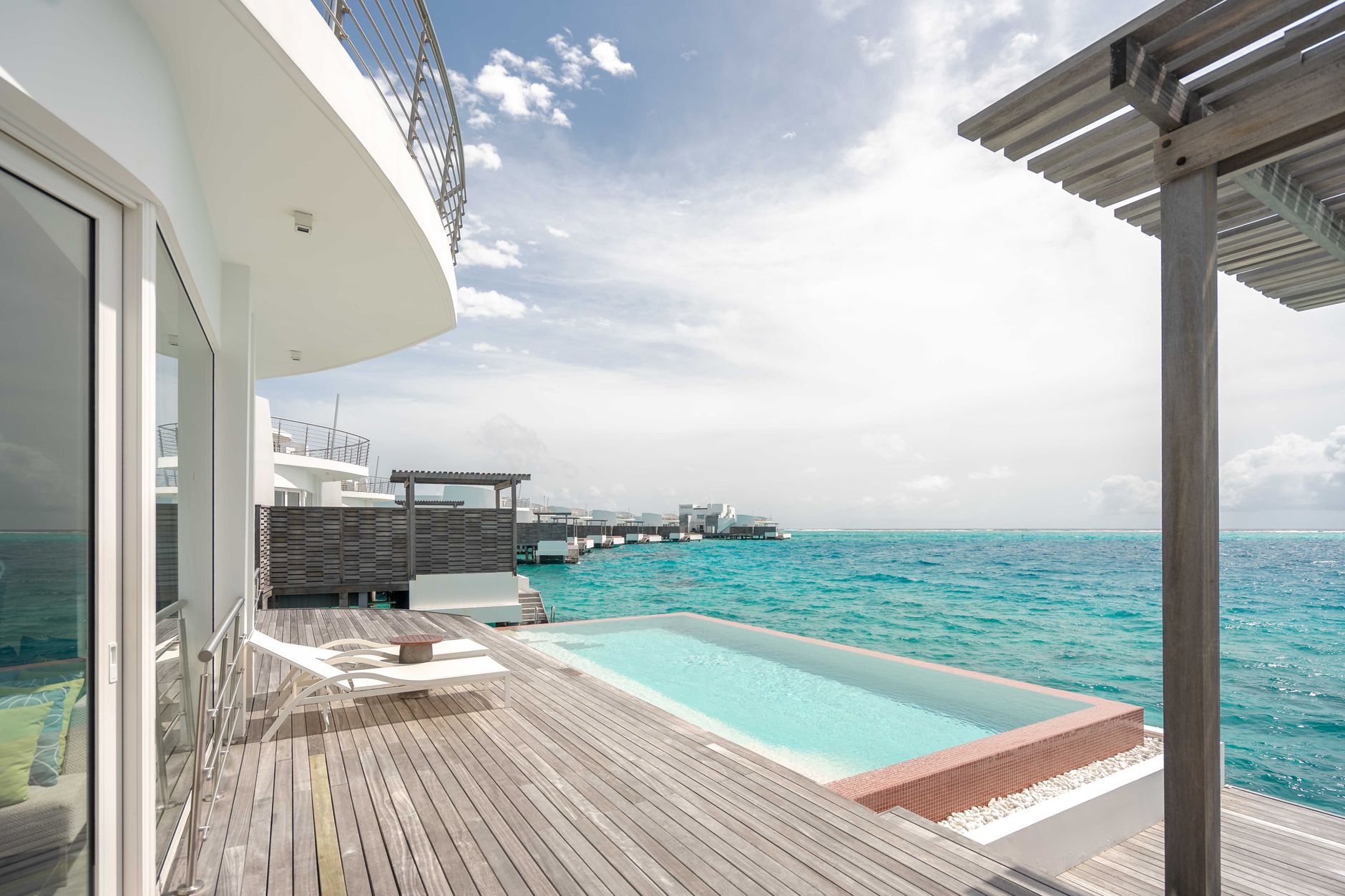
First, a definition, because “villa” covers everything from a holiday rental to something quite different. At the level we’re discussing, a villa is staffed: a private chef or cook, daily housekeeping, often a villa manager or butler who runs the place and a driver on call. It is not a house you fend for yourself in. It is closer to a private hotel with one guest list — yours — where the staff are there to cook your meals, keep the place, and handle the logistics, and the pool, the living pavilion and the garden belong to your party alone.
That staffed model is the thing that makes a villa a luxury proposition rather than a self-catering compromise, and it’s the thing that most determines whether the trip works. Hold that thought; it’s the whole answer to the question.
When the villa wins
The villa is the right call in a recognisable set of situations.
For groups — friends travelling together, several families, anything above about eight people. A villa gives a group the shared evening space that a block of hotel rooms can never replicate: everyone coalesces on the terrace at night without booking a restaurant table for sixteen, the children have somewhere to be, and the group functions as a group rather than as separate parties who happen to be in the same building.
For multi-generational families, for the same reason in a gentler key: a villa with several bedroom wings gives each household its own space and the family a shared centre, which is precisely the structure a three-generation trip needs.
For travellers who want privacy and seclusion above all — a honeymoon, a milestone, a trip whose entire point is that no one else is there.
For long stays, where a hotel room starts to feel small by the fifth day and a villa starts to feel like living somewhere.
And in destinations where the villa is the native luxury format — Bali above all, but also parts of Thailand, Tuscany, the Greek islands, where the best of the place is expressed in private villas as much as in hotels, and choosing a hotel means missing a register of the destination.
A villa gives a group the thing a block of hotel rooms never can: a shared evening space where sixteen people become a group rather than separate parties in the same building.
When the hotel wins
And the hotel is the right call at least as often.
For couples and small parties, where a villa’s shared space is simply wasted — two people don’t need a living pavilion and a private chef, and they often do better with a hotel’s service, restaurants and the easy ability to step out into somewhere with life in it.
For a first visit to a destination, where a hotel’s location, concierge, restaurants and front desk are exactly the scaffolding you want while you find your feet — a villa drops you into a place with less of a guide to it.
For shorter stays, where the rhythm of a villa — settling in, provisioning, finding the staff’s groove — doesn’t have time to pay off before you leave.
For travellers who actively want buzz — restaurants to rotate through, a bar with other people in it, the texture of a hotel — for whom a private villa’s quiet reads as isolation rather than luxury.
And for anyone for whom the 24-hour reassurance of a hotel matters — a front desk that’s always staffed, a doctor on call, the institutional backstop. A great villa replaces this with its manager; a lesser one doesn’t replace it at all.
The variable that decides everything
Here is the thing that travellers booking a villa alone most often get wrong, and it is the entire game: the staff is the villa.
A staffed villa with an excellent team — a chef who cooks your dietary requirements beautifully and learns your preferences by day two, a manager who runs the logistics so smoothly you forget they’re happening, attentive housekeeping, a good driver — is among the best trips you can take, full stop. The same villa, architecturally identical, with an indifferent or thin team is a holiday rental with a nicer view: you’ll spend the week managing it instead of being inside it. The building is the part you see in the photographs. The team is the part that decides the trip, and it is invisible in every listing.
This is why a villa booked cold off a rental site is a genuine gamble. The photographs tell you about the architecture and nothing about the people, and the people are the variable. It’s also why booking a villa well is a different exercise from booking a hotel: with a hotel, the brand is a rough guarantee of a service standard; with a villa, there is no brand, and the only guarantee is knowing the specific team.
The variables under the variable
A few more things decide a villa, all of which the listing won’t tell you.
The catering model. Is the chef included or extra? Are groceries on top, and bought how? Some villas include a cook and you pay for ingredients at cost; some quote the staff but not the food; the real cost of a villa is the rate plus how the kitchen actually works, and it varies enough to surprise people who only compared the headline rate.
The location. Villas are often more remote than hotels — that’s frequently the point — which means a car and a driver are not optional, dinner out is a planned drive rather than a walk downstairs, and the seclusion you wanted on day one can feel like distance on day four. Whether that trade is right depends entirely on the trip and the party.
The manager. In a villa, the manager replaces the hotel’s entire front desk, concierge and duty-manager function in one person. A great one makes the villa feel like the best hotel you’ve stayed in; a weak one leaves you with no one to turn to when something breaks. The manager is the single most important hire in the building, and it is exactly the thing you cannot assess from photographs.
How we book them, and the honest limit
Because the staff is the villa, we book villas the way we book nothing else: on the team, not the building. We use villas where we know the people — the chef, the manager — or where a local partner we trust stands behind them, and we brief them as thoroughly as any hotel: the dietary requirements to the chef in specific terms, the occasion, the rhythm the party wants, the children’s needs. The architecture we can verify from a distance. The team we will not vouch for unless it’s known.
The honest limit is the one the hotel half of the table was right about: a villa is more self-directed than a hotel, and when something goes wrong, the manager is your front desk, your concierge and your safety net in one. That is wonderful when the manager is excellent and exposing when they’re not — which is the whole reason we won’t put a group in a villa whose team is a question mark. Get the team right and the villa is the best booking on the trip. Get it wrong and you’ve rented a beautiful house and a week of low-grade management. The difference is never in the photographs. It’s in the people the photographs don’t show.